What is LaserSETI?
LaserSETI is a growing network of rooftop cameras that watch huge patches of the night sky for a single-color flash of light. Here is how it works, where the stations are in 2026, and what it has (and has not) found.
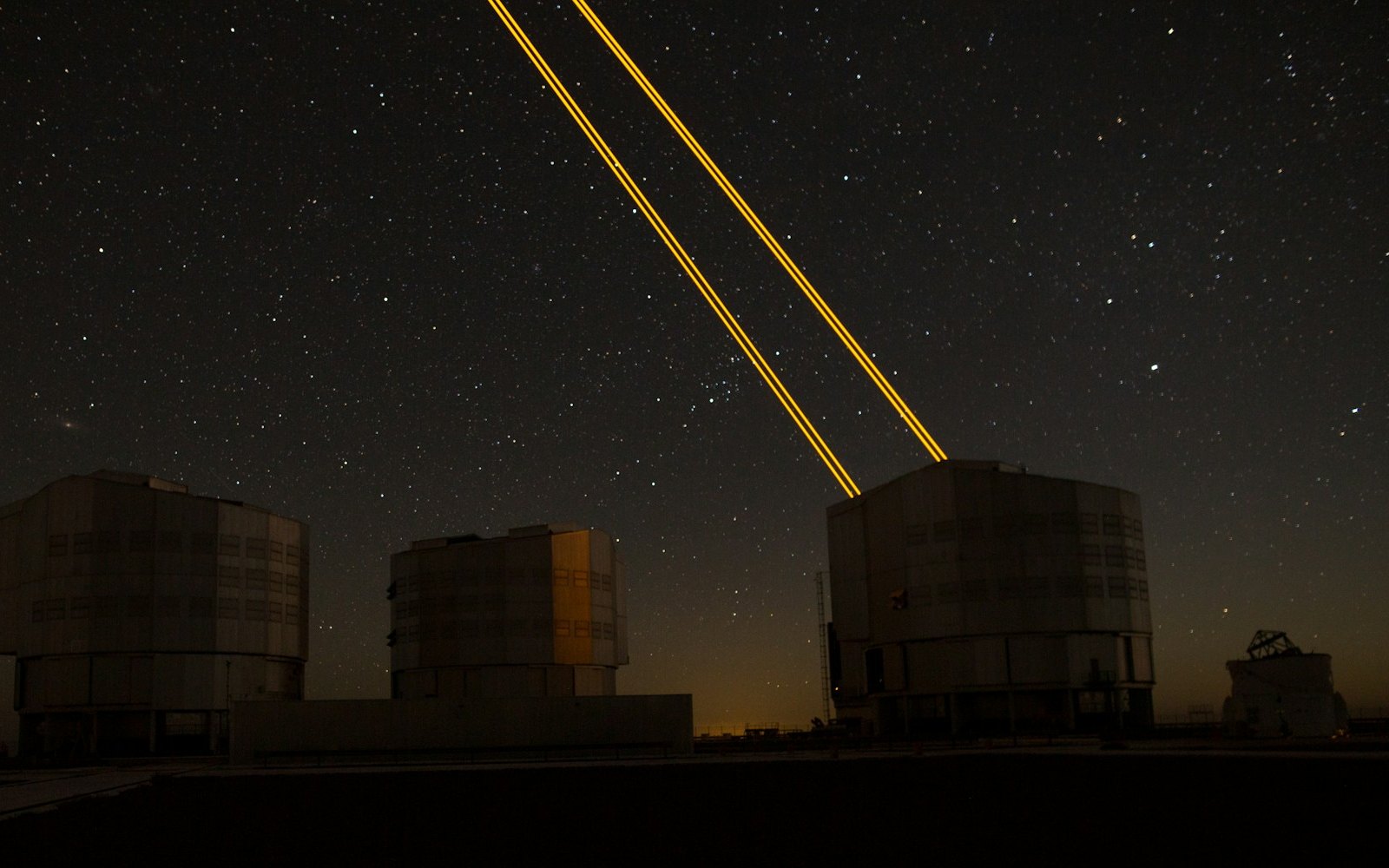
Most of us picture the search for aliens as a giant radio dish cupped toward the sky, patiently listening for a faint hum. LaserSETI takes a different and slightly more restless approach. Run by the SETI Institute in California, it is a growing network of small, sturdy camera boxes that stare at enormous patches of the night sky and wait for one very specific thing: a brief flash of light in a single, pure color. Its motto is 'All the sky, all the time', which is a lovely ambition and an honest warning about the workload. Here is what LaserSETI is, how it works, and what it is actually up to in 2026.
Why look for laser flashes at all
The short answer is that light can be aimed far more tightly than radio. In a public talk posted on the project's website, LaserSETI's principal investigator Eliot Gillum points out that light can be focused roughly a million times better than radio waves. Shine our biggest laser through our biggest telescope mirror and, in that one narrow direction, the flash could outshine the sun by about ten thousand times. A civilization with a few extra centuries of practice could send a signal that is very easy to spot, if someone is looking at the right patch of sky at the right moment.
There is a second reason, and it is the clever one. As the SETI Institute puts it, powerful lasers could be common among technological civilizations, but they do not occur in nature. A laser pulse is concentrated into a very narrow slice of color, while stars and sunlight glinting off satellites spread their light across the whole rainbow. And a laser does not have to be a friendly hello. Gillum notes that a craft pushed by a giant laser beam, like the light sail idea proposed by Breakthrough Starshot, would spill light that could be seen from far away, even if its builders had no interest in chatting with us at all.
Where the idea came from
The idea is older than most of the people now working on it. On 15 April 1961, the journal Nature published a short paper by Robert Schwartz and Charles Townes titled 'Interstellar and Interplanetary Communication by Optical Masers', optical maser being the early name for what we now call a laser. The timing is striking, because the first working laser had only been reported the year before. Townes went on to share the 1964 Nobel Prize in Physics for the work that made masers and lasers possible, so he was not exactly guessing.
For decades afterward, radio got most of the attention in SETI, and optical searches tended to point one telescope at one star and watch for pulses lasting a few billionths of a second. LaserSETI flips that around. The project began at the SETI Institute in 2015, led by Eliot Gillum, a former director of engineering for Hotmail and Outlook.com at Microsoft who first met Frank Drake in a Cornell astronomy class. A crowdfunding campaign in 2017 paid for the first instruments, private donors added more, and the first station saw first light on 6 August 2019.
How the cameras work
Each LaserSETI instrument holds two wide-field cameras sitting behind a transmission grating, a thin piece of optics that splits incoming light into its colors, much like a prism. Through it, an ordinary star turns into a bright dot with a streak of spectrum on either side. A laser pulse, being essentially one color, would not smear out into a rainbow. It would land as a tidy extra dot at a very particular spot. The cameras use a readout technique called time delay integration, reading out more than a thousand times per second, so they can catch flashes lasting milliseconds. Each camera covers a circle about 75 degrees across, roughly nine thousand full Moons.
The two cameras in each box look at the same sky but are turned 90 degrees to one another, one reading its detector vertically and the other horizontally. Together they pin down where a flash happened, and both must see it before anything counts as a candidate. Every patch of sky is also meant to be watched from two sites far apart, with clocks precise enough to measure the tiny delay between them. That rules out things close to home, such as laser rangefinders on orbiting satellites. The hardware is refreshingly ordinary: off-the-shelf cameras and lenses, a small PC, a Raspberry Pi, 3D printed parts and a stainless steel case.
Where the stations are right now
The network has grown slowly and stubbornly. The first station went up at the Robert Ferguson Observatory in Sonoma County, California, in 2019. A second observatory on Haleakala in Maui was finished in December 2021, after surviving shipping damage, parts shortages and, yes, a blizzard in Hawaii. In July 2024 two instruments were installed in Sedona, Arizona, and the team said coverage would rise from about 18 percent of the night sky to 30 percent. In August 2025 three more went onto the roof of a marine station on Isla Magueyes, off Puerto Rico's southern coast, which the SETI Institute said on 15 September 2025 would lift coverage to nearly 40 percent.
There is also a desert chapter. In August 2024 the SETI Institute and the Royal Commission for AlUla in Saudi Arabia announced that a LaserSETI instrument would be installed at the AlUla Manara Observatory. As of late September 2026, the project's public status page lists two AlUla stations next to California, Hawaii and Arizona, with camera snapshots from AlUla dated August and September 2026, though we could not find a formal announcement of that installation. Meanwhile, one working instrument spent May 2025 to February 2026 on display at London's Natural History Museum, with plans to put it to work afterward. We could not find where it went next.
What they have found so far
Let's get this out of the way: no aliens, at least not yet. LaserSETI has not reported any confirmed signal from another civilization. What it has found is a lot of very ordinary Earth. In the public talk on the project's site, which is undated, Gillum lists the false alarms the software has to sort through: blinking aircraft strobes, and cosmic rays hitting the detector and leaving dots, streaks and squiggles. At that point the project had logged roughly 2,600 hours of observing, more than 100 terabytes of data and around 18 billion candidate events, the vast majority of which were quickly thrown out by the automated pipeline.
The most exciting moments so far were three events that carried the full signature of a possible detection. All three were eventually traced to a newly discovered quirk in the cameras, where rows of the detector occasionally run backward and fake a signal. The team says it is working with the camera maker to understand it. A little disappointing, and exactly how good science should go. The whole design exists so that a flash of light has to survive a gauntlet of checks, and when something slips through, the job is to find out why rather than ring the bell.
What comes next
The goal is still the whole sky, all night, from both hemispheres, and the plans have shifted as the project has learned. The observatories page describes six sites, three per hemisphere, while Gillum's talk estimates about a dozen sites with four or five instruments each. In September 2025 the SETI Institute named the Canary Islands as the next planned partner for Puerto Rico. An older 2021 plan also listed Chile, and some summaries online mention 15 instruments at seven sites by early 2026, but we could not find the project confirming that, so treat it as a wish list rather than a headcount. The project site's footer still reads 2023, so its roadmap pages may lag behind reality.
LaserSETI may turn out to be useful even if the aliens stay quiet. Its wide, fast, color-sensitive view is good at catching meteors, and NASA lent the team a meteor camera so they could compare notes. Gillum has also floated sorting the billions of non-alien events into families, and maybe one day asking volunteers to help. He likes to point out that fast radio bursts went unnoticed for decades because nobody was looking the right way, and that LaserSETI watches a corner of the sky that almost nobody else does. In a July 2026 essay he also argued that finding anyone out there might finally make humanity feel like one team.
So that is LaserSETI in 2026: a handful of stainless steel boxes on rooftops in California, Hawaii, Arizona, Puerto Rico and, it seems, the Saudi desert, blinking into the dark every clear night and patiently ignoring airplanes. It has not found anyone yet, and it might never. But there is something quietly wonderful about a project built on the idea that if someone out there ever flicks on a light, we should at least be watching. Next time you step outside on a clear night and look up, it is nice to know a few cameras are looking too, just in case someone waves.
More articles
The moon is, in fact, an inanimate, dusty old rock
The moon is a layered ball of rock about 4.5 billion years old, wrapped in sharp gray dust and almost no air. Here is what it is made of, where it probably came from and why it barely changes.
How solar storms mess with satellites
The sun has weather, and some of it reaches us. Here is how solar flares and the storms that follow can sink satellites, scramble GPS and even trip power grids, and how people keep watch.

Patterns in sound
Sprinkle salt on a drum, play a steady note, and the grains slide into neat lines and rings. Here is why sound draws pictures, who first noticed, how to try it at home, and what all this has in common with a snowflake.
Most of the sound around you goes unheard
Human ears catch only a middle band of all the sound there is. Here is what we miss, which animals hear it, and why the hums and whines from our own gadgets can still get under our skin.
Most of the light around you is invisible
Our eyes catch only a thin band of all the light there is, from violet to red. Here is what we miss, which animals see more of it, and how we use the invisible rest every day.

The science of music
Why a good chorus gives you chills, why the Mozart effect fizzled, and why some songs refuse to leave your head. Here is what the research actually says about music, mood and focus.
Bill Nye is still teaching
A science show from the 1990s is still turning up in classrooms. Here is what Bill Nye the Science Guy was, why so many grownups remember it so fondly, and why teachers keep pressing play.

Why is the sky blue?
The sky is blue because the tiny bits of gas in the air reflect blue sunlight around much more than red light, so blue reaches our eyes from every part of the sky.
Why the sun and moon look the same size
The sun is about 400 times wider than the moon and also about 400 times farther away, so the two discs look almost the same size in our sky. That match is a coincidence of timing, and it will not last forever.
Bees fly more like drones than planes
A bumblebee stays in the air the way a drone or helicopter does, by moving its wings fast instead of racing forward over a stiff wing.
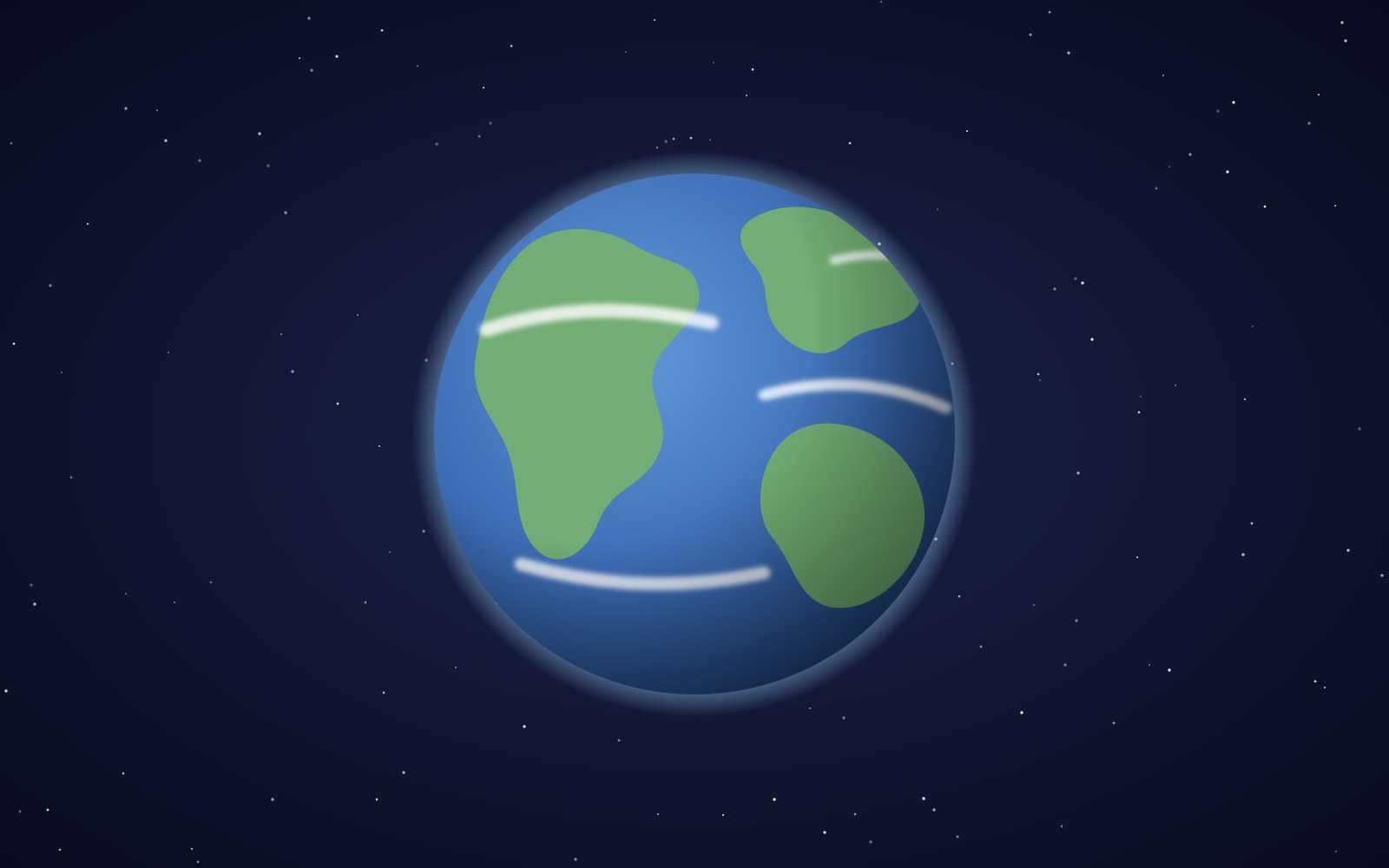
The Earth is, in fact, round
You can check that Earth is round from a beach, a campsite or a phone call to a friend in another time zone. People worked it out more than two thousand years ago, and one of them even measured it with shadows.
Meet the Night Sky UI Kit
Three animated React components for dark, night-sky themed sites: a star cursor, a twinkling starfield and a soft aurora glow. Here is what's inside and how to add it.

Behind the Star Cursor
How the Star Cursor draws its comet tail and sparkle dust, and why it quietly steps aside on touch screens and for anyone who prefers reduced motion.

5 trendy UI effects
A star cursor with a comet tail, frosted glass panels, scroll-driven animation, smooth page transitions and gradients that actually move, plus the one tip we would give for each.
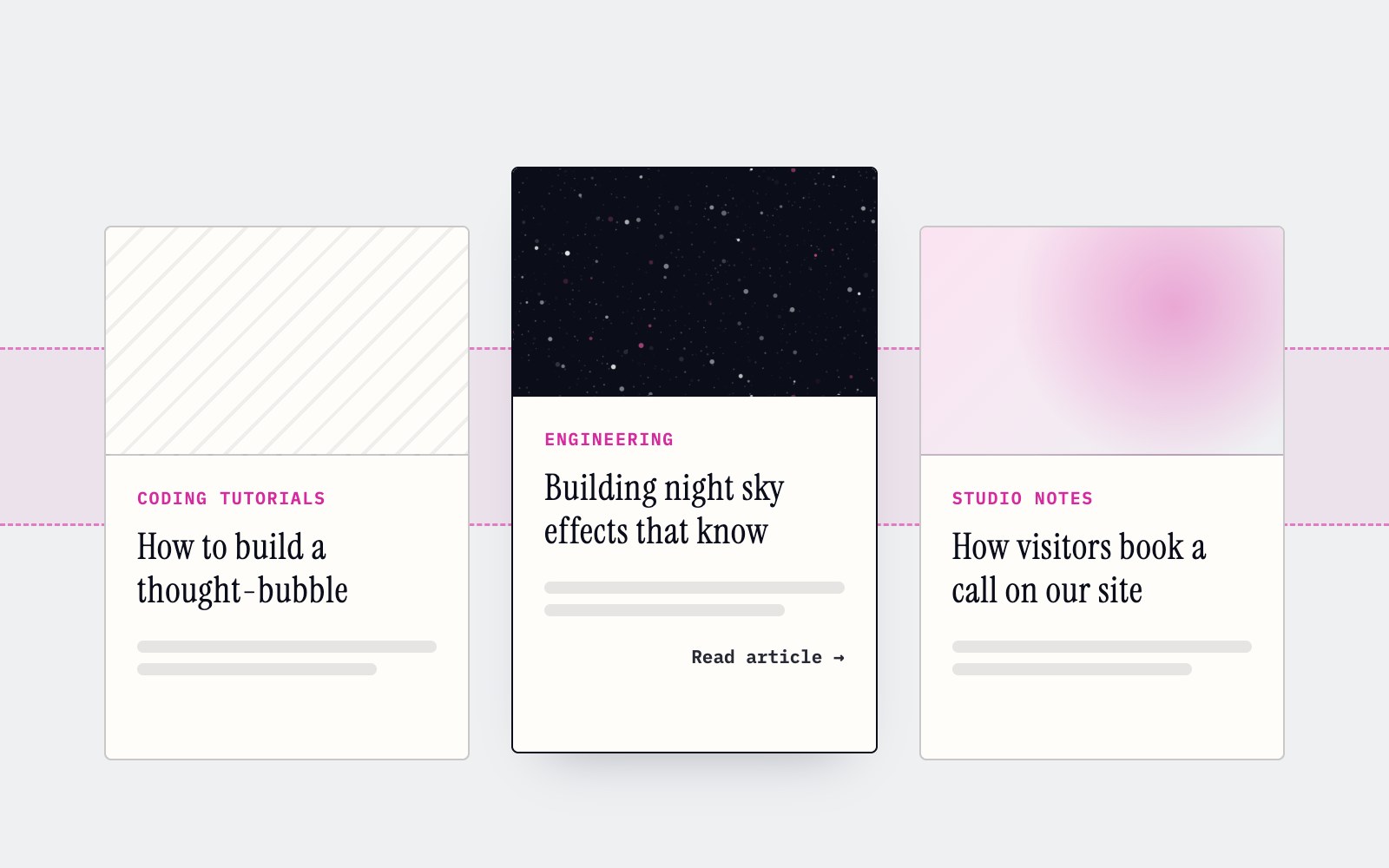
How to make cards lift as you scroll on a phone
Phones can't hover, so our blog cards used to sit flat on mobile. Here's the small CSS class and IntersectionObserver we use to lift whichever card is in the middle of the screen as you scroll.

What llms.txt is, and how we added one to our site
A plain-English look at llms.txt, the proposed markdown file that gives AI assistants a short map of your site, what it can and can't promise, and how we wrote and tested our own.

Tell Google who you are with a few lines of code
Small business names collide, and search engines have to guess which one you meant. Organization structured data is one way a site owner can stop them guessing. Here's what it is, what we put in ours, and how to test it.
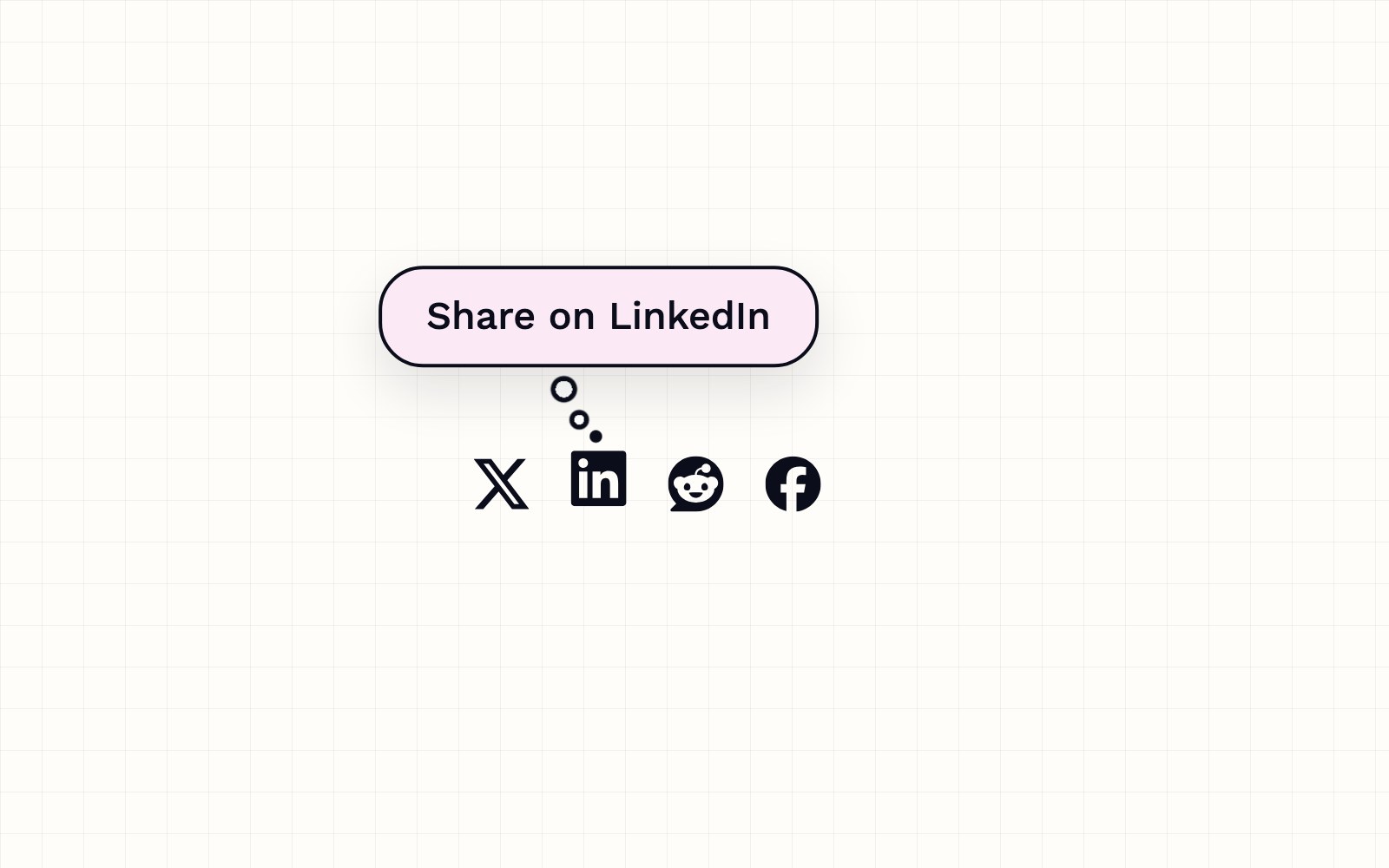
How to build a thought-bubble tooltip with pure CSS
A step-by-step CSS tutorial for a tooltip that reads its label from a data attribute, pops up in a rounded bubble, trails off in three little circles and stays clickable, with no JavaScript.

Building night sky effects that know when to sit out
How the Night Sky UI Kit's star cursor, starfield and aurora check the visitor's device and settings before they draw a single frame.

How you can set up pull requests to get an automatic first review
Give every pull request an automatic first review the moment it opens, and send each new pull request and its review to a dedicated Slack channel. Here is how the pieces fit.

How visitors book a call on our site
Picking a time with us takes a few clicks and never leaves the page. Here is how the booking calendar on our site works, and the small checks that stop two people grabbing the same hour.
Inside our resumable, review-gated video production pipeline
How we built a local seven-step pipeline that turns a history topic into a captioned video, with resumable state, bounded retries, and a human review gate.