How solar storms mess with satellites
The sun has weather, and some of it reaches us. Here is how solar flares and the storms that follow can sink satellites, scramble GPS and even trip power grids, and how people keep watch.
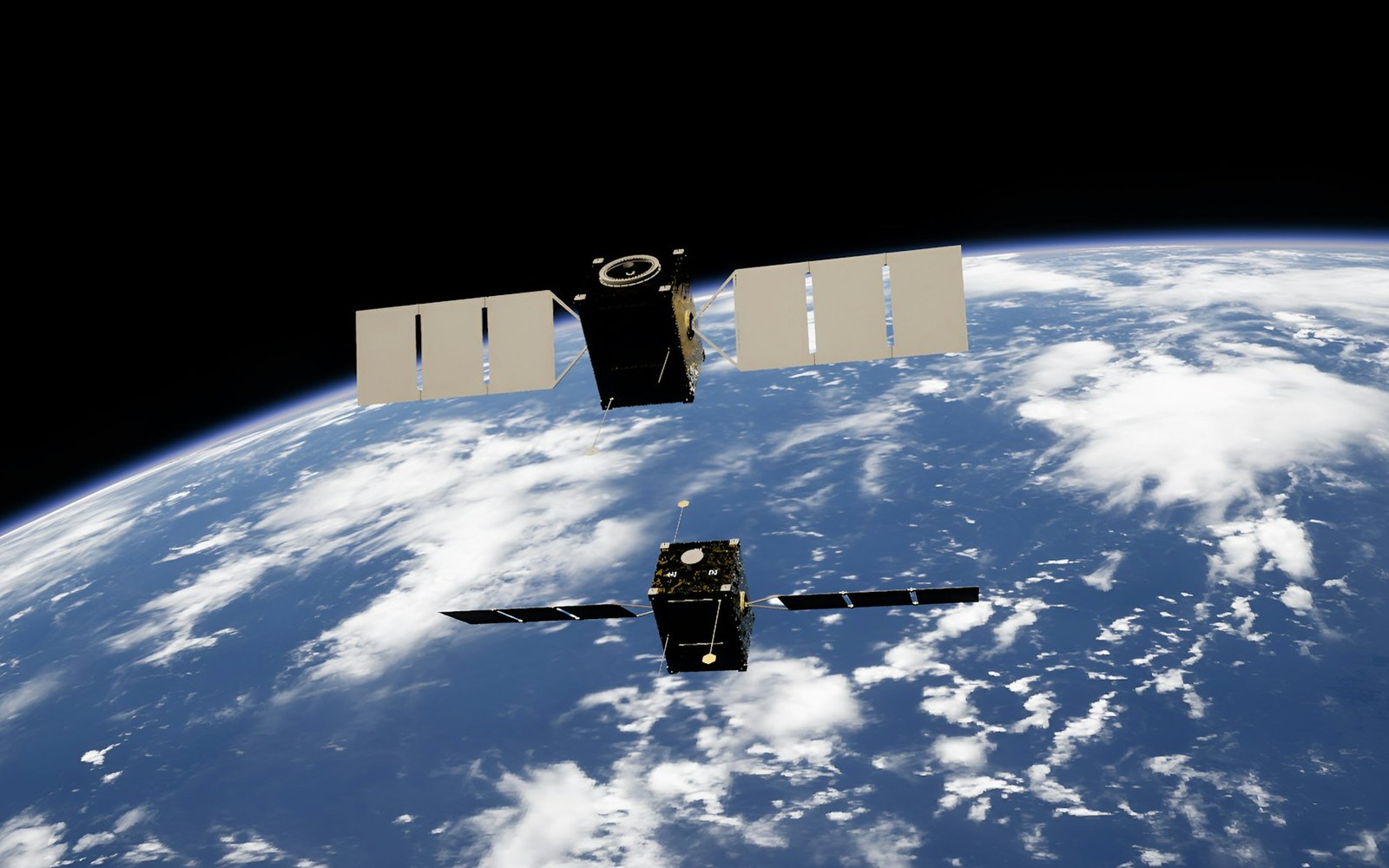
Look up on a clear night and you might catch a satellite gliding past, a small steady dot crossing the stars. Thousands of them are up there now, quietly passing along phone calls, weather maps, GPS directions and the internet for people far from any cable. Most days they have an easy time of it. But the sun has weather too, and every so often it throws a tantrum big enough to reach us. When it does, satellites feel it first. Some slow down and sink, some get zapped by fast particles, and the signals they send us can come out garbled. Down on the ground, the same storms have set telegraph paper on fire and switched off a whole province. Here is how it all works, and how people keep watch.
Flares, CMEs and the storms that follow
Two different events sit behind the phrase solar storm. NASA explains that a solar flare is a bright flash of light, an intense burst of radiation from a tangled spot on the sun. That light travels at light speed, so it reaches us in about eight minutes. A coronal mass ejection, or CME, is something else entirely: a giant cloud of hot gas and magnetic field hurled off into space. The two often happen together, and NASA notes the strongest flares almost always come with a CME, but they send out different things and travel differently. Think of the flare as a camera flash and the CME as something thrown, which takes a lot longer to arrive.
According to NOAA's Space Weather Prediction Center, a CME usually needs several days to cross the gap to Earth, though the fastest ones make it in about 15 to 18 hours. When one lands with its magnetic field pointing the right, or rather the wrong, way, it shakes Earth's own magnetic field and kicks off a geomagnetic storm that can rumble on for many hours. NOAA ties the largest of these storms to CMEs, and they drive most of the trouble for low satellites and power grids. Flares mostly cause short radio blackouts on the sunny side of the planet, while the fast particles some eruptions fling out cause what NOAA calls radiation storms. Three flavors of space weather, one stormy sun behind them all.
Why low satellites start to sink
Satellites in low orbit are not quite in empty space. There is still a whisper of air up there, enough to drag on them. NOAA explains that when the sun pours extra energy into the upper atmosphere, it heats up and rises, so a satellite suddenly finds itself plowing through thicker air. It slows, it drops, and unless it can push itself back up, it eventually falls and burns. NOAA says that even when the sun is quiet, low satellites need a boost about four times a year, and near the busy peak of the solar cycle that can climb to every two or three weeks. NOAA notes that during the big storm of March 1989, NASA's Solar Maximum Mission suddenly lost height, a sharp drop that the agency still points to as an example.
A well documented recent loss came in February 2022. SpaceX launched 49 Starlink satellites into a deliberately low starting orbit, about 210 kilometers up, according to the BBC. A day later a moderate geomagnetic storm arrived. SpaceX said onboard GPS showed drag up to 50 percent higher than on earlier launches. SpaceX turned the satellites so their thin edge faced forward, which cuts the push of the air, but the drag still won and they could not climb back to a safe height. A NOAA study later confirmed that 38 of the 49 were lost, and traced the loss to the thicker upper atmosphere the storm stirred up.
Zapped circuits, fuzzy GPS and radio silence
Drag is not the only hazard. NOAA says the energetic protons in a radiation storm can punch deep into a satellite and damage its electronic circuits, while strong geomagnetic storms can build up electric charge on a spacecraft's surface and cause problems with keeping it pointed the right way. Solar panels take a beating over the years too. The European Space Agency explains that every space solar cell wears a thin sheet of cover glass, about a tenth of a millimeter thick, because a bare cell would degrade as much in a few days as a protected one does in fifteen years. Engineers build in that kind of armor because the space around Earth is full of fast electrons and protons.
Then there is the signal problem. GPS satellites beam their signals down through the ionosphere, the electrically charged layer of our upper atmosphere, and NOAA compares it to a lens that bends the signal. Receivers correct for a normal, calm ionosphere, but a storm scrambles it. NOAA says a simple receiver that is usually accurate to about a meter or less can drift to errors of tens of meters or more during a severe storm. High frequency radio, the long range kind used by airlines, ham operators and emergency agencies, suffers too. The burst of X rays from a big flare can swallow those radio waves across the daylit side of Earth, sometimes for minutes and in the worst cases for hours.
When it reaches the ground
The classic story is the Carrington Event. On September 1, 1859, the English astronomer Richard Carrington watched a blinding white flare erupt on the sun, and just before dawn the next day the sky lit up. NASA's retelling describes auroras so bright people could read a newspaper by them, glowing as far south as Cuba, Jamaica and Hawaii. Telegraph systems went haywire around the world. Sparks shocked operators and set telegraph paper alight, and some lines kept carrying messages even after the batteries were disconnected, powered only by currents the storm pushed through the wires. The fastest long distance network of the day was, for a little while, running on the sun.
A more modern wake up call came on March 13, 1989. Hydro Quebec says the Earth's magnetic field was fluctuating violently, the grid's protection system was triggered, and the blackout came in less than a minute, leaving the province dark for more than nine hours. NOAA's top geomagnetic storm level, G5, warns of widespread voltage control problems, possible grid collapse and even transformer damage. Planes feel space weather as well. Flights over the poles lean on high frequency radio, and NOAA says radiation storms can knock that radio out near the poles. In the more extreme events, NOAA adds, passengers and crew on high flying aircraft at high latitudes may be exposed to extra radiation.
May 2024, the storm we all saw
If you remember neighbors posting pink and green skies in May 2024, you have met a geomagnetic storm in person. A string of big flares and CMEs left the sun that week, and NASA says the clouds of gas bunched up and arrived together starting May 10. The storm reached G5 on NOAA's scale, the first since 2003, and NASA called it the strongest solar storm to reach Earth in two decades. Auroras showed up as far south as the southern United States and northern India. Out in orbit, NASA's ICESat 2, which studies polar ice sheets, slipped into safe mode, likely because of the extra drag, and some other spacecraft powered down instruments ahead of time as a precaution.
It was a busy weekend for the satellites that stayed awake. Researchers at MIT, writing in the Journal of Spacecraft and Rockets, found that automated orbit keeping, mostly on Starlink, caused nearly half of all active satellites in low orbit to maneuver at once, which made it very difficult to predict where everything would be and spot possible collisions. Down on farms, tractors that steer themselves by satellite got confused right in the middle of planting season. 404 Media and The Verge reported that a chain of John Deere dealers told customers the accuracy of some systems was extremely compromised, and some farmers stopped planting until the signals settled down.
Keeping an eye on the sun
The good news is that people are watching around the clock. NOAA's Space Weather Prediction Center issues watches, warnings and alerts, a lot like a regular weather service, and it rates events on simple one to five scales: R for radio blackouts, S for radiation storms and G for geomagnetic storms. Ahead of the May 2024 storm, NASA says the center sent notices to power grid and satellite operators so they could prepare. Forecasters lean on a small fleet of sun watchers, including NASA's Solar Dynamics Observatory, the SOHO spacecraft run by ESA and NASA and, since June 2026, NOAA's new SOLAR 1 observatory, stationed about a million miles away toward the sun as an early warning post for incoming CMEs.
All of this matters a little more right now. The sun runs on a cycle of roughly eleven years, swinging between quiet and stormy. In October 2024, NASA and NOAA announced that Solar Cycle 25 had reached its maximum period, and the Royal Observatory of Belgium, which keeps the world's official sunspot count, later confirmed the peak landed that same month. NASA points out that fairly significant storms still show up during the declining years after a peak. Operators have tools for them, from safe modes and turning spacecraft edge on to firing thrusters to raise their orbits. After a severe storm in November 2025, ESA reported that the impact on critical technologies was limited.
The same storms that make satellite operators sweat also paint the sky with auroras, and in a strong one you may not need to travel far north to see them. NOAA's Space Weather Prediction Center posts a free aurora forecast for tonight and tomorrow night over North America, built from its three day geomagnetic forecast. So the next time the forecast lights up, check it, find a dark spot away from streetlights, and look toward the northern horizon. And if your phone's map wobbles a little that same evening, the sun may well have had a hand in it. Somewhere above that glow, thousands of satellites are adjusting course so your GPS keeps working in the morning.
More articles
The moon is, in fact, an inanimate, dusty old rock
The moon is a layered ball of rock about 4.5 billion years old, wrapped in sharp gray dust and almost no air. Here is what it is made of, where it probably came from and why it barely changes.
Patterns in sound
Sprinkle salt on a drum, play a steady note, and the grains slide into neat lines and rings. Here is why sound draws pictures, who first noticed, how to try it at home, and what all this has in common with a snowflake.
Most of the sound around you goes unheard
Human ears catch only a middle band of all the sound there is. Here is what we miss, which animals hear it, and why the hums and whines from our own gadgets can still get under our skin.
What is LaserSETI?
LaserSETI is a growing network of rooftop cameras that watch huge patches of the night sky for a single-color flash of light. Here is how it works, where the stations are in 2026, and what it has (and has not) found.
Most of the light around you is invisible
Our eyes catch only a thin band of all the light there is, from violet to red. Here is what we miss, which animals see more of it, and how we use the invisible rest every day.

The science of music
Why a good chorus gives you chills, why the Mozart effect fizzled, and why some songs refuse to leave your head. Here is what the research actually says about music, mood and focus.

Bill Nye is still teaching
A science show from the 1990s is still turning up in classrooms. Here is what Bill Nye the Science Guy was, why so many grownups remember it so fondly, and why teachers keep pressing play.
Why is the sky blue?
The sky is blue because the tiny bits of gas in the air reflect blue sunlight around much more than red light, so blue reaches our eyes from every part of the sky.
Why the sun and moon look the same size
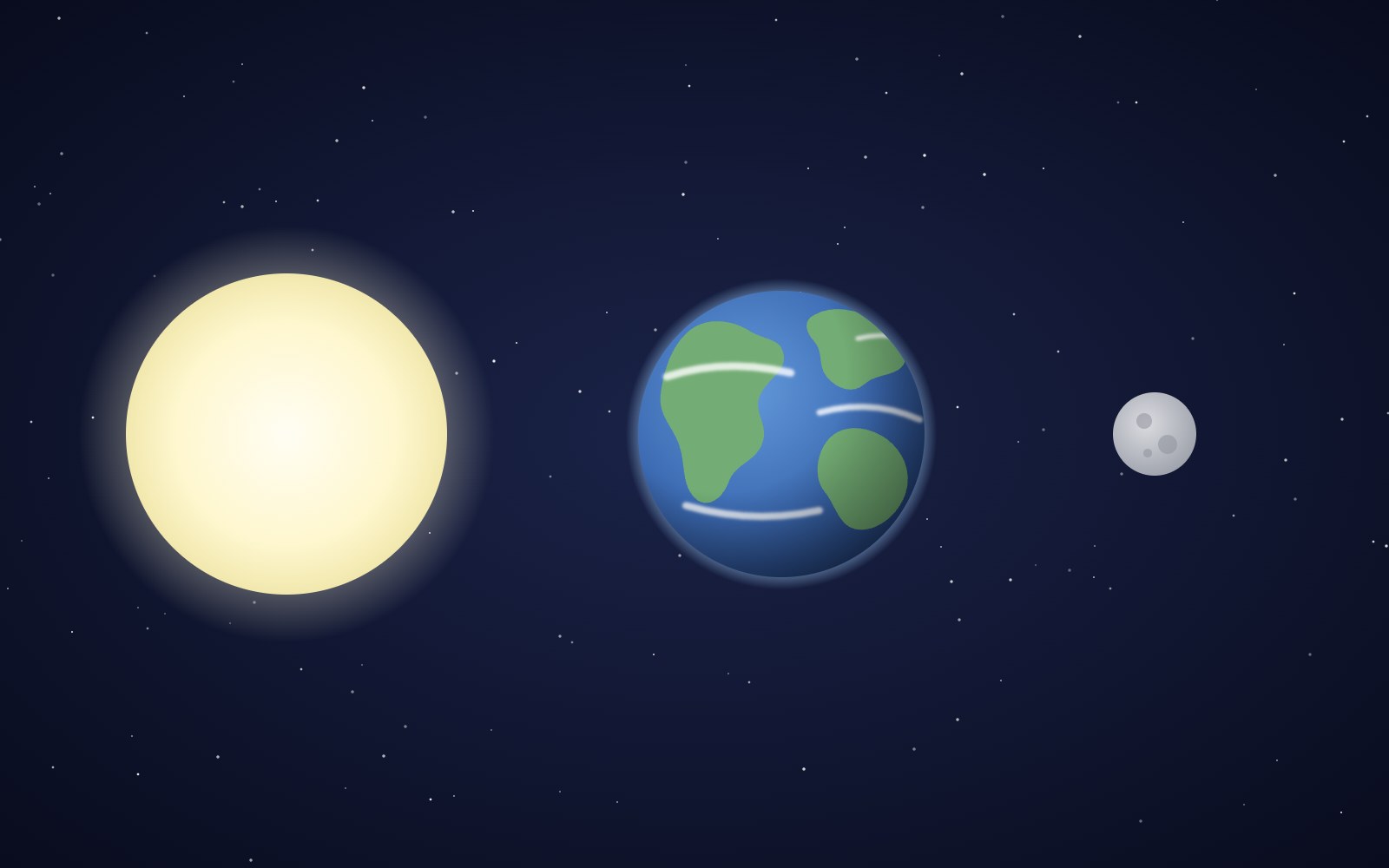
The sun is about 400 times wider than the moon and also about 400 times farther away, so the two discs look almost the same size in our sky. That match is a coincidence of timing, and it will not last forever.
Bees fly more like drones than planes
A bumblebee stays in the air the way a drone or helicopter does, by moving its wings fast instead of racing forward over a stiff wing.
The earth is, in fact, actually round
You can check that Earth is round from a beach, a campsite or a phone call to a friend in another time zone. People worked it out more than two thousand years ago, and one of them even measured it with shadows.
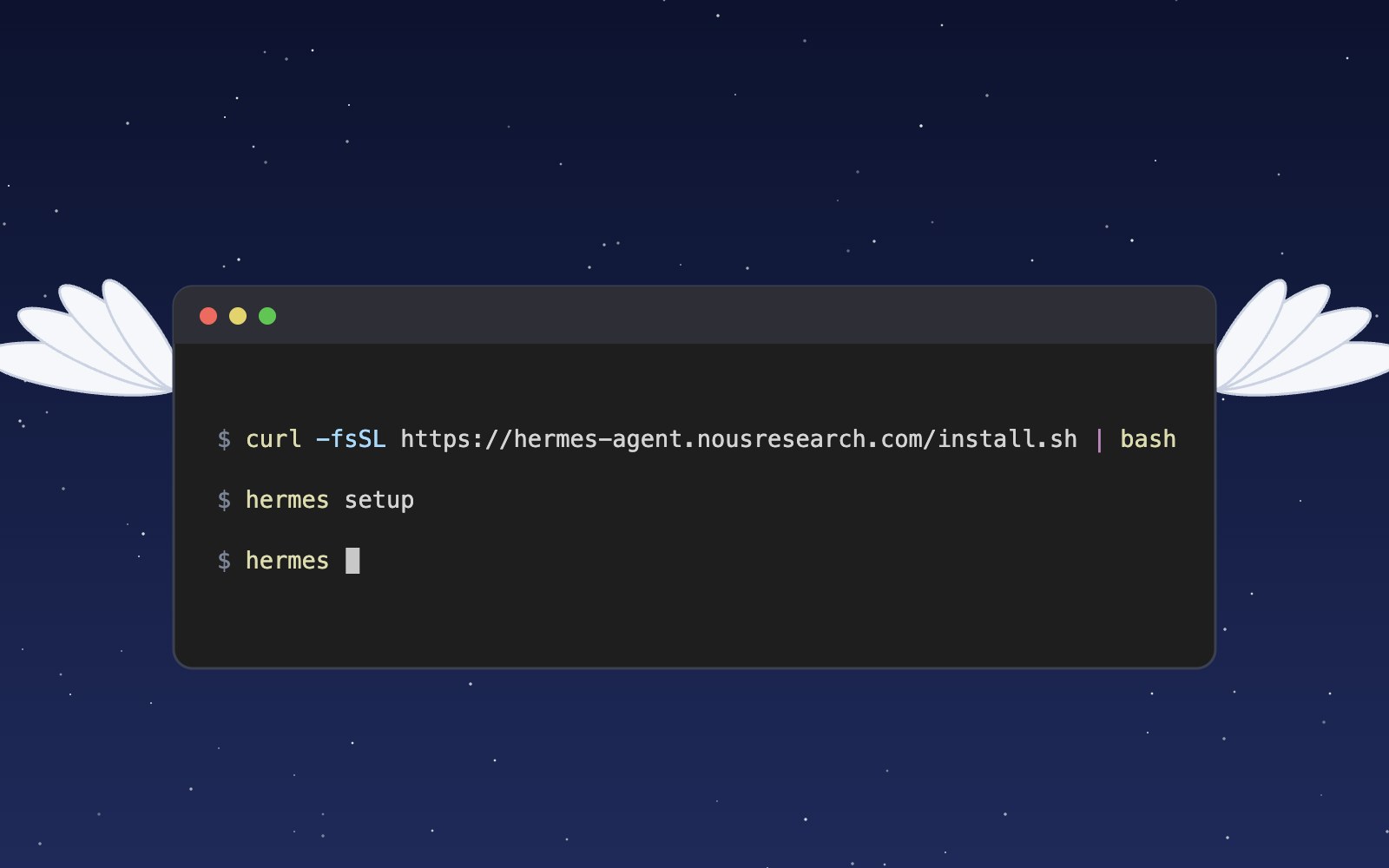
What is Hermes?
Hermes is an open source AI agent harness from Nous Research that runs on your own computer, uses tools, remembers past sessions and learns skills. Here is what it does and how to install and set it up.
Meet the Night Sky UI Kit
Three animated React components for dark, night-sky themed sites: a star cursor, a twinkling starfield and a soft aurora glow. Here is what's inside and how to add it.
Behind the Star Cursor
How the Star Cursor draws its comet tail and sparkle dust, and why it quietly steps aside on touch screens and for anyone who prefers reduced motion.
5 trendy UI effects
A star cursor with a comet tail, frosted glass panels, scroll-driven animation, smooth page transitions and gradients that actually move, plus the one tip we would give for each.

How to make cards lift as you scroll on a phone
Phones can't hover, so our blog cards used to sit flat on mobile. Here's the small CSS class and IntersectionObserver we use to lift whichever card is in the middle of the screen as you scroll.

What llms.txt is, and how we added one to our site
A plain-English look at llms.txt, the proposed markdown file that gives AI assistants a short map of your site, what it can and can't promise, and how we wrote and tested our own.

Tell Google who you are with a few lines of code
Small business names collide, and search engines have to guess which one you meant. Organization structured data is one way a site owner can stop them guessing. Here's what it is, what we put in ours, and how to test it.
How to build a thought-bubble tooltip with pure CSS
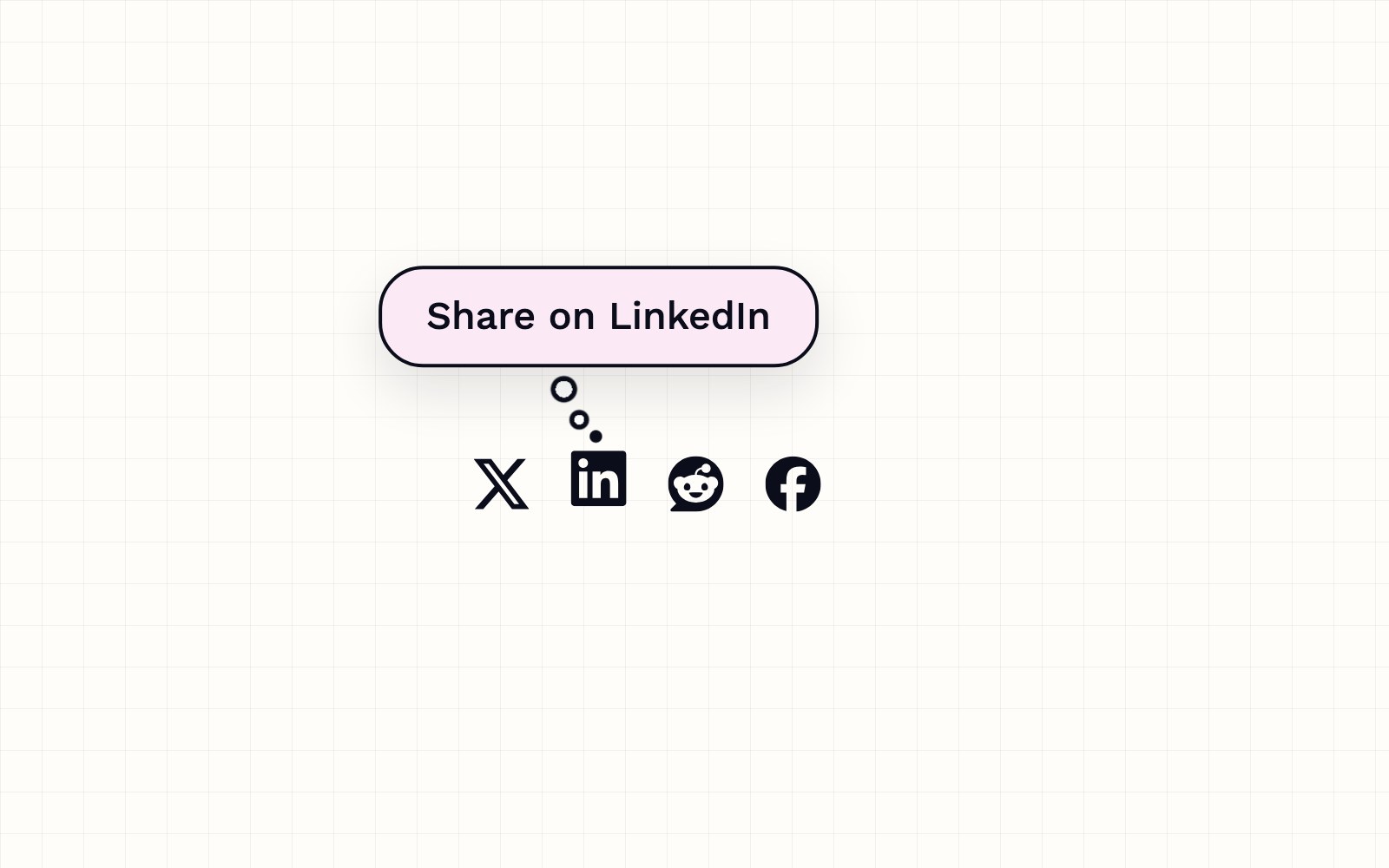
A step-by-step CSS tutorial for a tooltip that reads its label from a data attribute, pops up in a rounded bubble, trails off in three little circles and stays clickable, with no JavaScript.

Building night sky effects that know when to sit out
How the Night Sky UI Kit's star cursor, starfield and aurora check the visitor's device and settings before they draw a single frame.
How you can set up pull requests to get an automatic first review
Give every pull request an automatic first review the moment it opens, and send each new pull request and its review to a dedicated Slack channel. Here is how the pieces fit.
How visitors book a call on our site
Picking a time with us takes a few clicks and never leaves the page. Here is how the booking calendar on our site works, and the small checks that stop two people grabbing the same hour.

Inside our resumable, review-gated video production pipeline
How we built a local seven-step pipeline that turns a history topic into a captioned video, with resumable state, bounded retries, and a human review gate.