Bill Nye is still teaching
A science show from the 1990s is still turning up in classrooms. Here is what Bill Nye the Science Guy was, why so many grownups remember it so fondly, and why teachers keep pressing play.
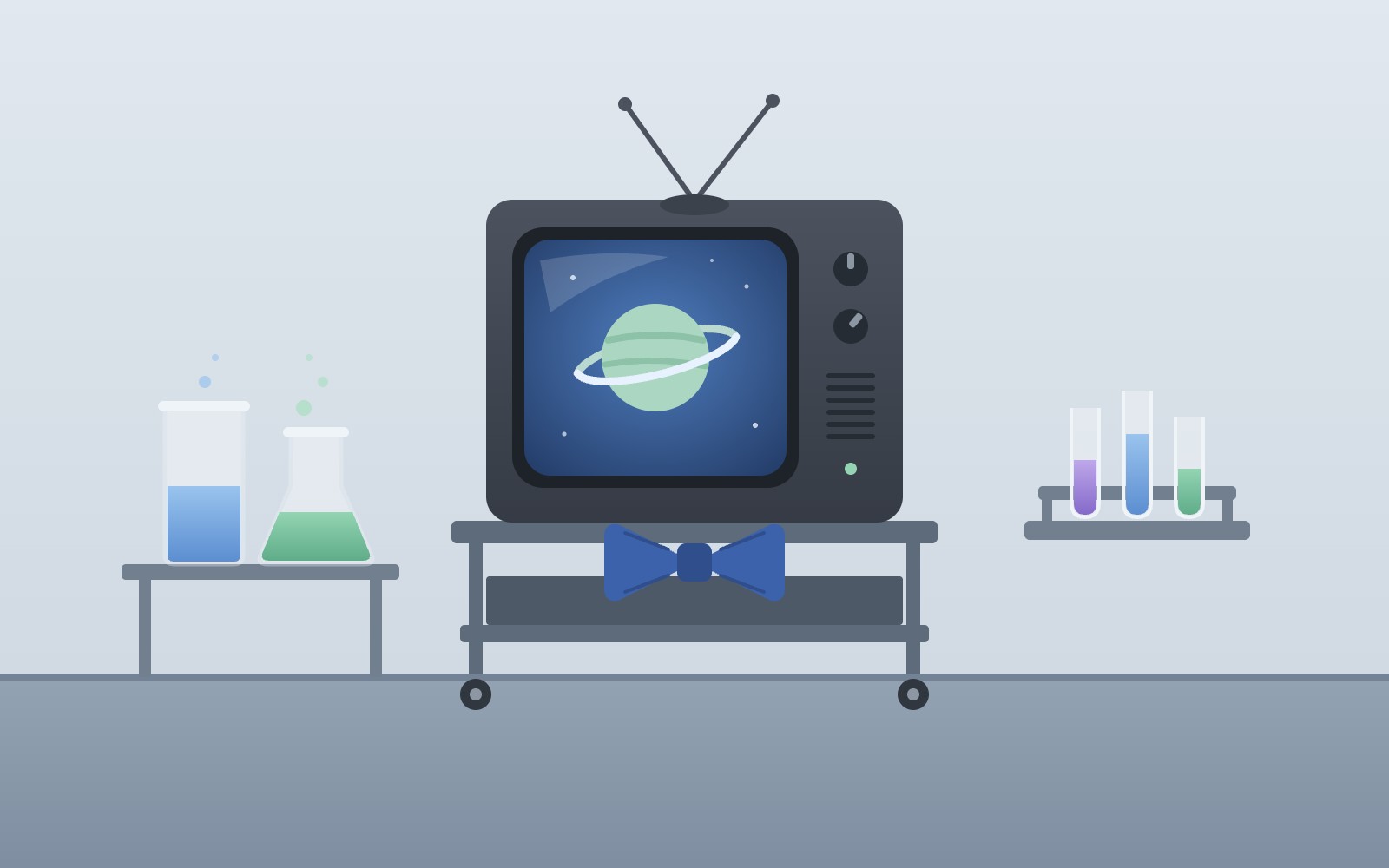
Picture a classroom with the lights dimmed and a big boxy television wheeled up to the front. For a lot of people who were kids in the 1990s, that setup came with a very specific promise: a tall man in a blue lab coat and a bow tie was about to explain something, quickly, with a joke every few seconds. That man was Bill Nye, and the show was Bill Nye the Science Guy. Its first run wrapped up decades ago, yet its episodes are still being played for kids born long after the final one aired. So what was the show, why do so many people remember it fondly, and how is it still getting used? Here is what the record shows.
What the show was
The show came out of Seattle, where it was produced with the local public TV station, KCTS, and each episode ran about half an hour. A pilot aired in April 1993, and the regular series started that September. The Smithsonian's National Museum of American History lists Buena Vista Television as its syndicator from 1993 to 1998, and PBS stations carried it as well, so the same episodes could turn up on public and commercial channels alike. The show made 100 episodes in total. In 1999, Multichannel News reported that the young cable channel Noggin had bought the rights to all 100, which kept reruns going for another wave of viewers after new production had stopped.
Awards piled up along the way. Counts of the show's Daytime Emmys usually land at 19 wins from 23 nominations. Two of its statues now sit in museum collections. Two of those trophies now sit in museums. Nye's own Daytime Emmy for his performance, from the 1997 to 1998 season, is in the Smithsonian collection, while Seattle's Museum of History and Industry keeps the show's 1999 award for best children's series. Before any of that, Nye was a mechanical engineer at Boeing who later wrote and performed for Almost Live, a local sketch comedy program. His Science Guy character was born on that show, which helps explain why the series always had one foot in the classroom and one foot on the comedy stage.
Why it stuck
The show was built for speed. Each episode chose a single subject, such as buoyancy, cells, sound or volcanoes, and then circled it from every direction it could think of. Viewers met working scientists on location. A recurring segment called Consider the Following slowed down just long enough for Nye to unpack one idea in detail. Kids at home showed off experiments made from ordinary kitchen supplies. There were spoofs of famous movies and fake ads, plus a song parody that turned the topic into a music video. Even the credits were fun to watch, since outtakes from the episode played underneath them, which gave kids one more reason to stay put until the very end.
Watching it again as a grownup, what jumps out at me is how little time it wastes. An idea gets named, demonstrated, teased, demonstrated again from a new side, and then tried out with stuff you could find at home. That looping seems to have mattered. In 1996, the research firm Rockman et al studied the series for KCTS and concluded that much of what children learned came from hearing the same points more than once within an episode. The researchers also reported that kids who watched the series could explain science ideas more fully than they could before they started. To me, that is the quiet trick of the show: goofy on the outside, carefully structured underneath.
Why it feels so warm now
Mention Bill Nye to someone who grew up in the 1990s and there is a good chance you will get a grin before you get a sentence. Psychologists have spent years studying that kind of reaction. At the University of Southampton, Constantine Sedikides, Tim Wildschut and their colleagues research nostalgia, and a 2016 paper from the group in Personality and Individual Differences lays out how ordinary people tend to describe it. In short, it is a warm look back, usually at childhood or at people close to us, that feels mostly good with a slight ache around the edges. In their experiments, stirring up nostalgia made people more hopeful about the future, largely by helping them feel more connected to others.
That research may help explain why the Science Guy sticks. For plenty of viewers, the show was something experienced with other people rather than alone. You might have watched an episode with thirty classmates in the morning and caught another at home later in the day. The 1996 Rockman report found that 92 percent of parents in the study had sat down to watch it with their child at least once, and the same share said their child brought the show up in conversation. So a mention of Bill Nye today can pull up far more than a single episode. It can bring back a particular classroom, the people in it and the small thrill of knowing the lesson was going to be a video.
Still in classrooms
The episodes never really graduated. In 2023, Teaching Channel, a website for educators, published a guide to using Bill Nye in lessons, with suggested episodes on subjects like heat and static electricity, and it noted that students still tend to light up when one comes on. SAFARI Montage, a video platform that school districts pay for, links to 65 episodes aimed at grades 3 to 8 and attaches a short quiz question to each one. The Described and Captioned Media Program, which gets its funding from the US Department of Education, offers Bill Nye titles with captions and audio description, so that students who are deaf, hard of hearing, blind or low vision can follow along as well.
Teachers also make their own materials to go with the show. Search Teachers Pay Teachers, the site where educators sell classroom resources, and you will find a long list of Bill Nye viewing guides covering cells, fossils, energy, phases of matter and plenty more. That tradition goes back to the original run. A 1998 study of the show by Rockman et al interviewed 176 teachers, found that 139 of them showed television programs in class on a regular basis, and recorded Bill Nye as one of the four series they brought up most often. The earlier 1996 study noticed that teachers liked to open a lesson with an episode and then build the rest of the class around it. Streaming has changed the screen, but not that habit.
What still holds up, and what does not
Much of what the show covers is basic science that has not changed since it aired. Rubbing surfaces still creates friction, sound still travels as vibrations, and living things are still made of cells. Bill Nye's official website keeps the original episode guide online, sorted into life science, physics, chemistry, earth science and space, with a summary and a list of big ideas for each topic. The home experiments age well, too. The Described and Captioned Media Program's write up for one compilation points out that the episode teaches kids to run an experiment more than once and check that the result comes out the same. A fourth grader can use that lesson today just as easily as one could in 1995.
There is one honest caveat. Science keeps learning, and any show from the 1990s is a snapshot of what was known when it was filmed. Space offers the clearest example. The classic guide for the Planets and Moons episode still counts nine planets, with Pluto at the end of the line, because that was the accepted list at the time. In 2006, the International Astronomical Union moved Pluto into the dwarf planet category, and in 2015 NASA's New Horizons probe gave us our first close look at it. The 1996 Rockman team also noticed that kids often had trouble applying what they learned to unfamiliar situations. So the clips tend to work best with a teacher or parent nearby to add what has changed.
If you would like to revisit a little of it, Bill Nye's official website still hosts the classic episode guide, complete with summaries and home demos for each topic, and the series can be streamed or bought through licensed services. Better still, choose one of those demos and try it with a kid you know. Watch their face when it works, or when it flops and they suddenly need to know why. That spark of curiosity is what the show was chasing in every episode. More than thirty years after it first aired, a man in a bow tie is still nudging kids to ask how the world works, and for anyone who teaches science, that seems like a lovely thing to leave behind.
More articles
The moon is, in fact, an inanimate, dusty old rock
The moon is a layered ball of rock about 4.5 billion years old, wrapped in sharp gray dust and almost no air. Here is what it is made of, where it probably came from and why it barely changes.
How solar storms mess with satellites
The sun has weather, and some of it reaches us. Here is how solar flares and the storms that follow can sink satellites, scramble GPS and even trip power grids, and how people keep watch.

Patterns in sound
Sprinkle salt on a drum, play a steady note, and the grains slide into neat lines and rings. Here is why sound draws pictures, who first noticed, how to try it at home, and what all this has in common with a snowflake.
Most of the sound around you goes unheard
Human ears catch only a middle band of all the sound there is. Here is what we miss, which animals hear it, and why the hums and whines from our own gadgets can still get under our skin.
What is LaserSETI?
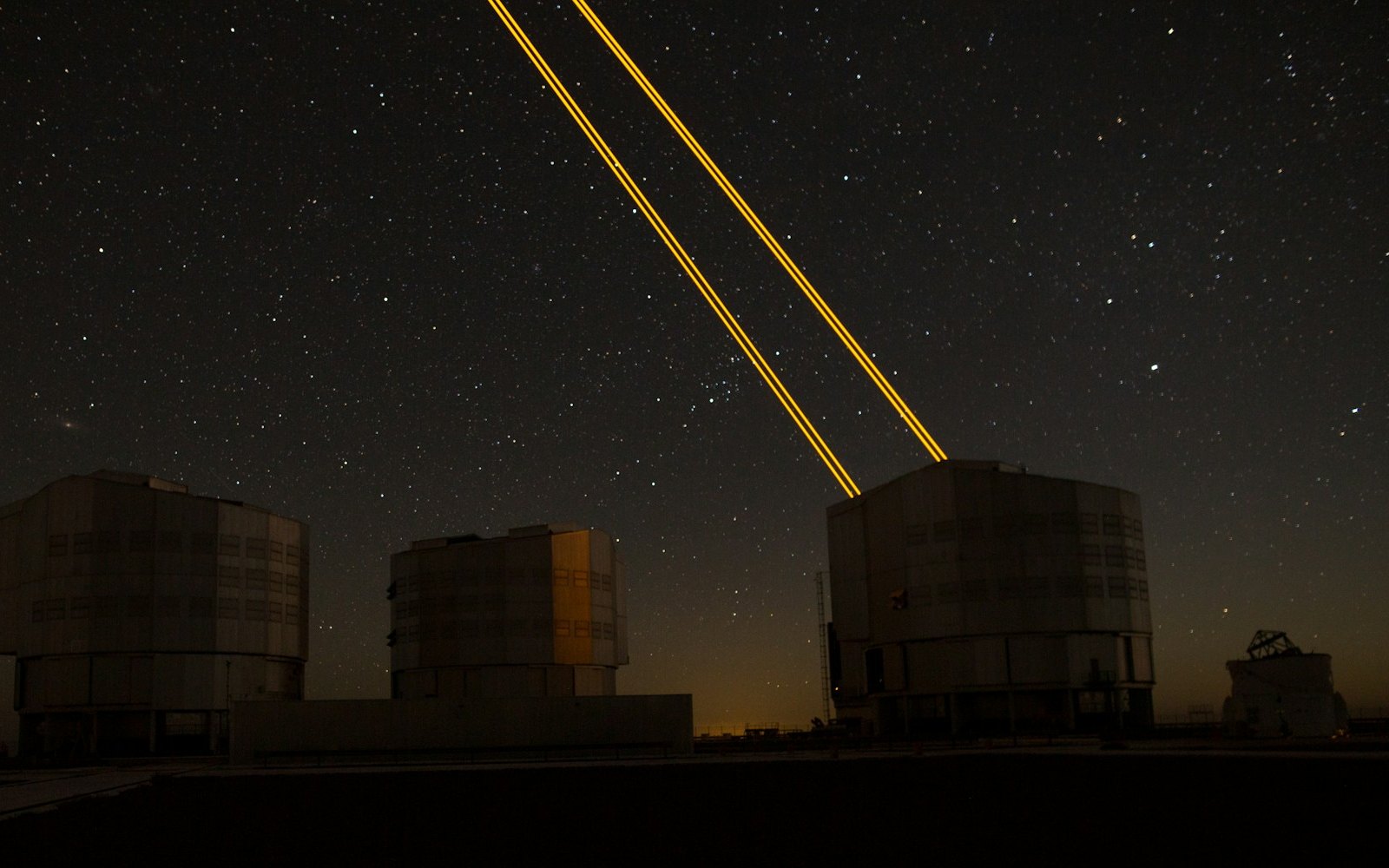
LaserSETI is a growing network of rooftop cameras that watch huge patches of the night sky for a single-color flash of light. Here is how it works, where the stations are in 2026, and what it has (and has not) found.
Most of the light around you is invisible
Our eyes catch only a thin band of all the light there is, from violet to red. Here is what we miss, which animals see more of it, and how we use the invisible rest every day.

The science of music
Why a good chorus gives you chills, why the Mozart effect fizzled, and why some songs refuse to leave your head. Here is what the research actually says about music, mood and focus.

Why is the sky blue?
The sky is blue because the tiny bits of gas in the air reflect blue sunlight around much more than red light, so blue reaches our eyes from every part of the sky.
Why the sun and moon look the same size
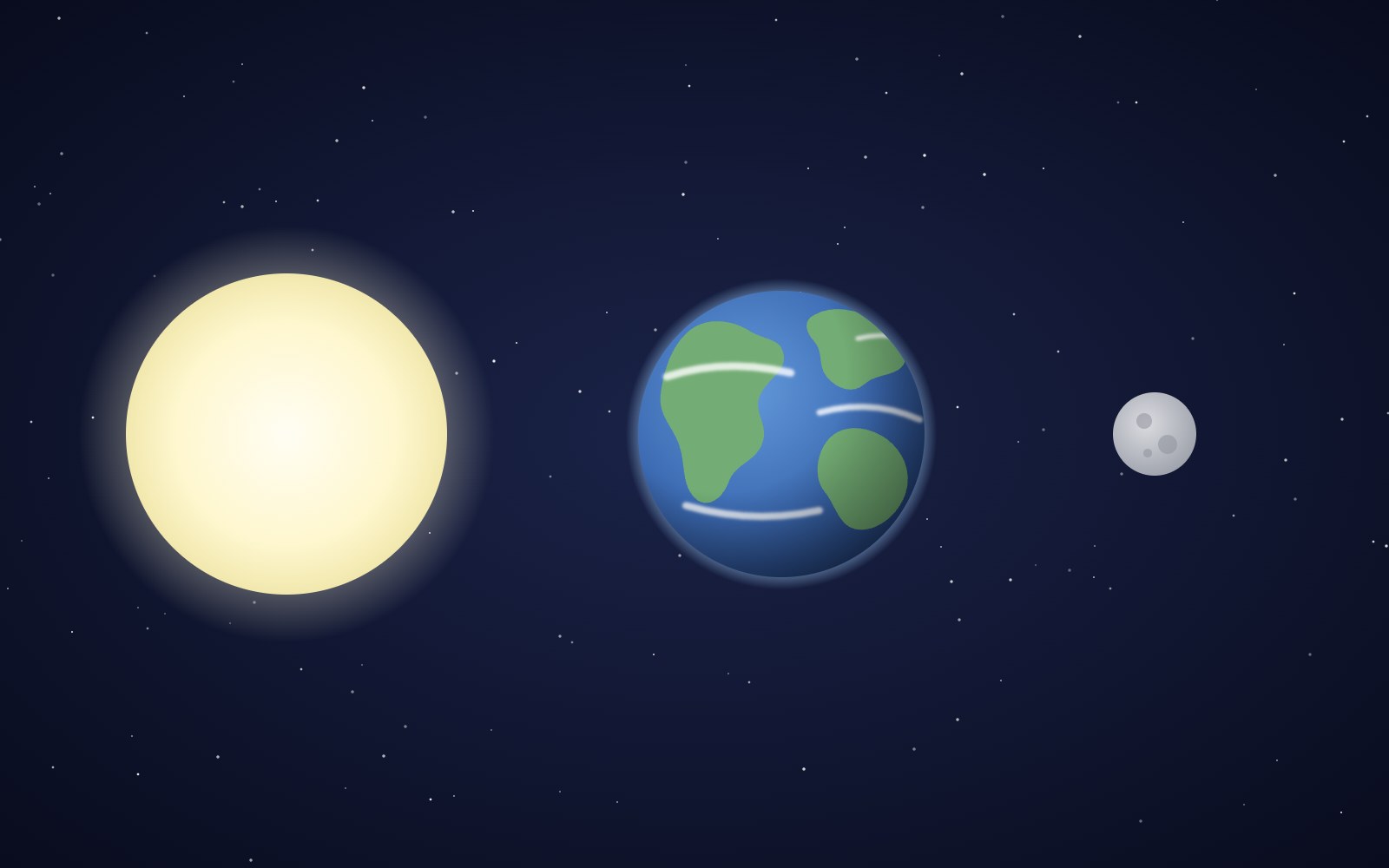
The sun is about 400 times wider than the moon and also about 400 times farther away, so the two discs look almost the same size in our sky. That match is a coincidence of timing, and it will not last forever.
Bees fly more like drones than planes
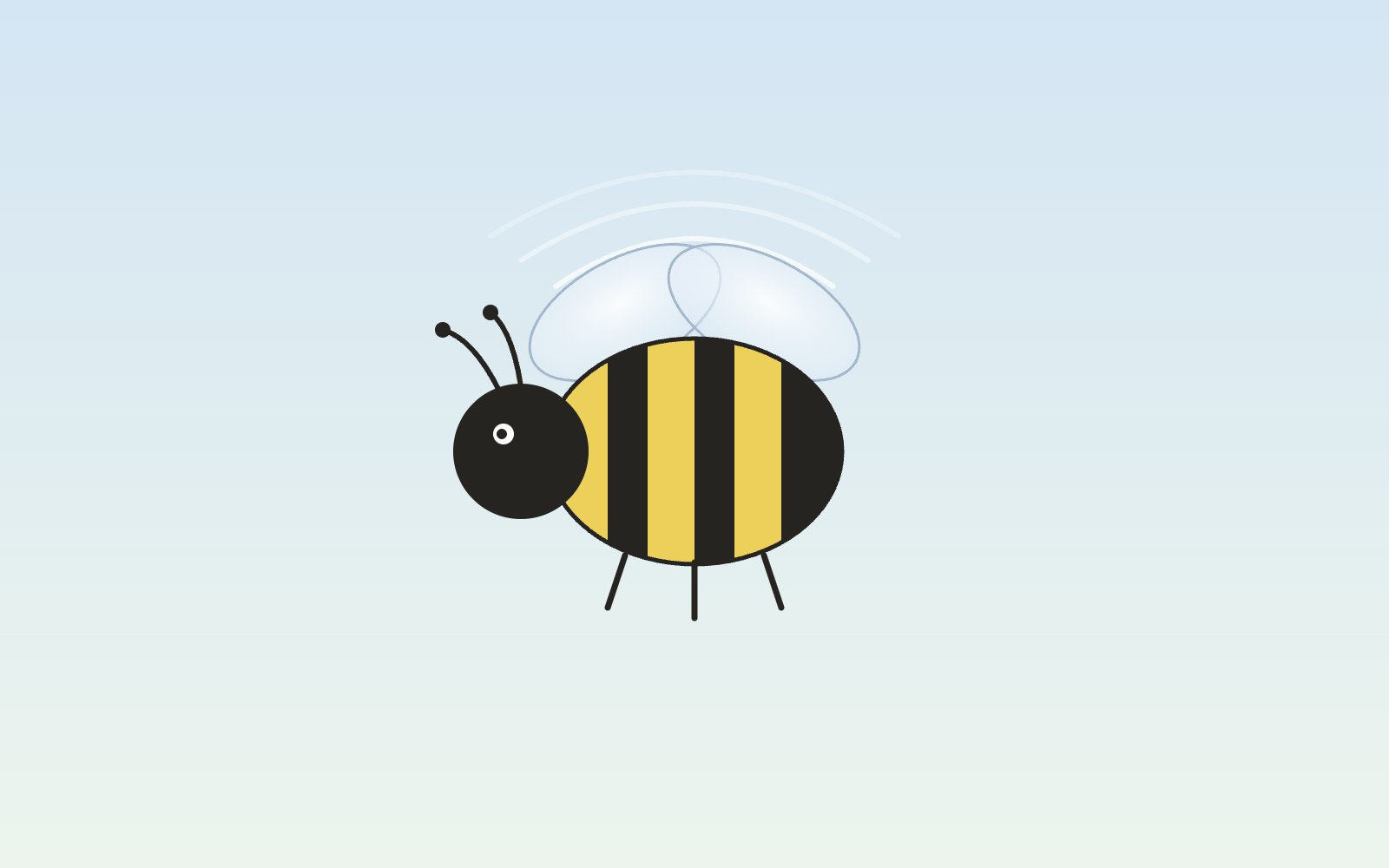
A bumblebee stays in the air the way a drone or helicopter does, by moving its wings fast instead of racing forward over a stiff wing.
The earth is, in fact, actually round
You can check that Earth is round from a beach, a campsite or a phone call to a friend in another time zone. People worked it out more than two thousand years ago, and one of them even measured it with shadows.
What is Hermes?
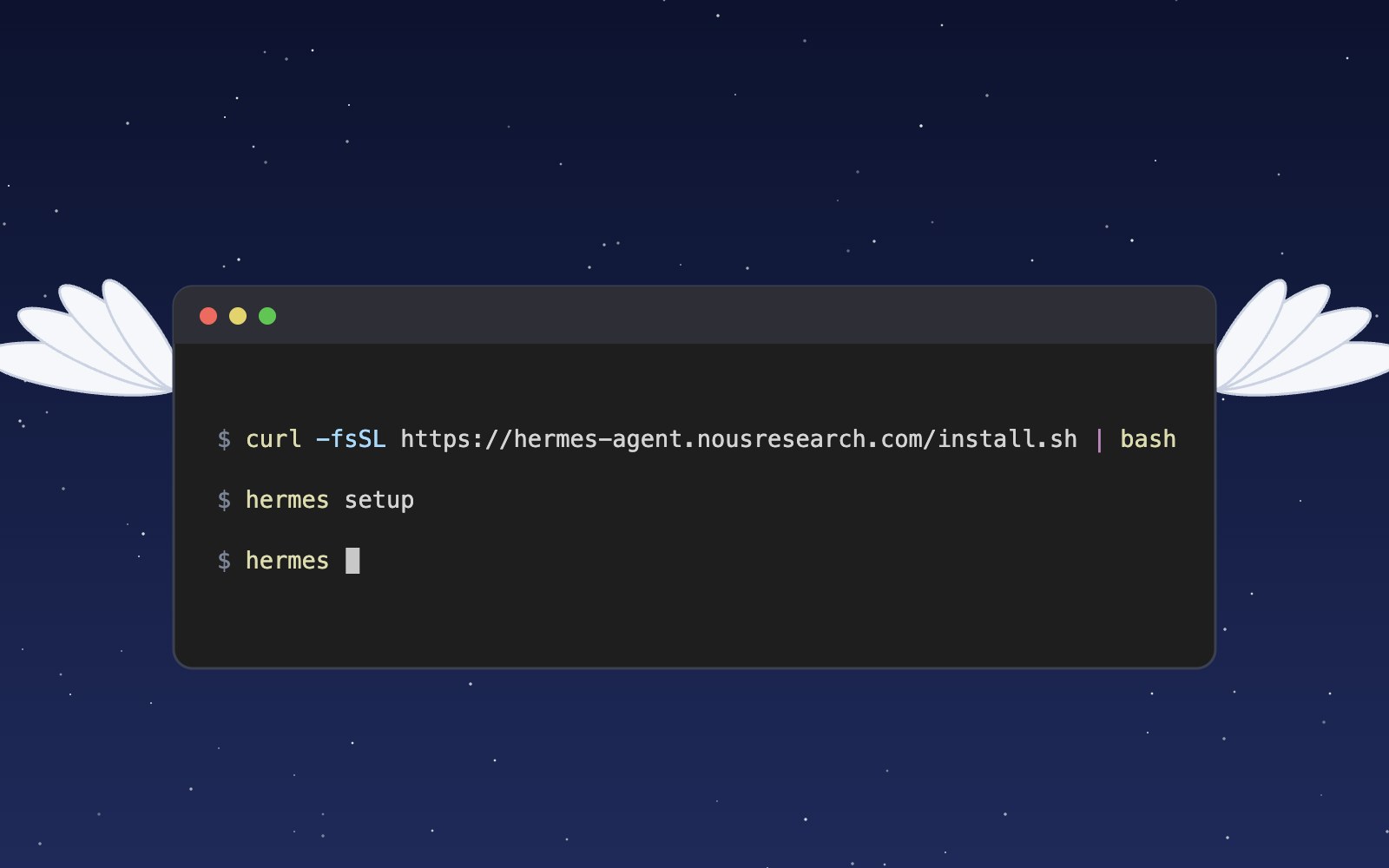
Hermes is an open source AI agent harness from Nous Research that runs on your own computer, uses tools, remembers past sessions and learns skills. Here is what it does and how to install and set it up.

Meet the Night Sky UI Kit
Three animated React components for dark, night-sky themed sites: a star cursor, a twinkling starfield and a soft aurora glow. Here is what's inside and how to add it.

Behind the Star Cursor
How the Star Cursor draws its comet tail and sparkle dust, and why it quietly steps aside on touch screens and for anyone who prefers reduced motion.

5 trendy UI effects
A star cursor with a comet tail, frosted glass panels, scroll-driven animation, smooth page transitions and gradients that actually move, plus the one tip we would give for each.
How to make cards lift as you scroll on a phone
Phones can't hover, so our blog cards used to sit flat on mobile. Here's the small CSS class and IntersectionObserver we use to lift whichever card is in the middle of the screen as you scroll.

What llms.txt is, and how we added one to our site
A plain-English look at llms.txt, the proposed markdown file that gives AI assistants a short map of your site, what it can and can't promise, and how we wrote and tested our own.
Tell Google who you are with a few lines of code
Small business names collide, and search engines have to guess which one you meant. Organization structured data is one way a site owner can stop them guessing. Here's what it is, what we put in ours, and how to test it.
How to build a thought-bubble tooltip with pure CSS
A step-by-step CSS tutorial for a tooltip that reads its label from a data attribute, pops up in a rounded bubble, trails off in three little circles and stays clickable, with no JavaScript.

Building night sky effects that know when to sit out
How the Night Sky UI Kit's star cursor, starfield and aurora check the visitor's device and settings before they draw a single frame.

How you can set up pull requests to get an automatic first review
Give every pull request an automatic first review the moment it opens, and send each new pull request and its review to a dedicated Slack channel. Here is how the pieces fit.
How visitors book a call on our site
Picking a time with us takes a few clicks and never leaves the page. Here is how the booking calendar on our site works, and the small checks that stop two people grabbing the same hour.
Inside our resumable, review-gated video production pipeline
How we built a local seven-step pipeline that turns a history topic into a captioned video, with resumable state, bounded retries, and a human review gate.