The science of music
Why a good chorus gives you chills, why the Mozart effect fizzled, and why some songs refuse to leave your head. Here is what the research actually says about music, mood and focus.

Music is a strange thing when you stop and think about it. It is just air wobbling in patterns, and yet a few bars can make you tear up in a grocery store, walk a little faster, or drop you straight back into a car ride from years ago. Scientists have spent decades trying to work out what is actually going on. Some of the answers are lovely, some are a bit deflating, and one might change how you hear the radio. Here is what the research says about how music shapes the way we think and feel.
Why a chorus gives you chills
You know the moment. The song builds, the drums drop out, and then the chorus lands and the hair on your arms stands up. That shiver has a name, frisson, and scientists take it seriously. In a 2001 study in the Proceedings of the National Academy of Sciences, Anne Blood and Robert Zatorre in Montreal scanned people listening to music they had picked because it gave them chills. As the chills got stronger, activity changed in brain areas tied to reward, emotion and arousal. Those are the same areas that respond to food, sex and, less charmingly, drugs.
A 2011 follow up in Nature Neuroscience, from researchers at the Montreal Neurological Institute, went a step further and tracked dopamine itself. At the peak moments, listeners' brains released dopamine in the striatum, a key hub of the reward system. The fun twist is timing. One part of that system, the caudate, was more involved while people were waiting for the big moment, and another, the nucleus accumbens, during the moment itself. So part of the pleasure is anticipation. Your brain enjoys the build almost as much as the drop, which might be why good songwriters love making you wait.
The Mozart effect that fizzled
In 1993, a short letter in Nature reported that college students at the University of California, Irvine did better on spatial reasoning tasks after 10 minutes of a Mozart sonata for two pianos than after a relaxation tape or silence. The tasks were things like paper folding and pattern puzzles, and the boost was temporary. Somewhere between the lab and the headlines, that turned into the idea that Mozart makes you smarter, the kind of fact people repeat at dinner parties. Pop culture loved it. The science had a harder time.
A 2010 meta-analysis in the journal Intelligence, from the University of Vienna, pooled nearly 40 studies and over 3,000 people. The Mozart piece did give a small bump on spatial tasks compared with silence, but other music gave about the same bump, and results were noticeably stronger in studies from the original research group than in other labs. The authors concluded there was little evidence left for a specific Mozart effect. A 2001 study in Psychological Science offers a likely explanation. An upbeat Mozart sonata helped people on a spatial task, but a slow, sad Albinoni piece did not, and once mood and arousal were accounted for, the effect vanished.
Can music help you focus
So should you put on a playlist while you work? The honest answer is that it depends, which is annoying but true. A meta-analysis in Psychology of Music, covering studies of adult listeners, found that averaged across everything, background music had roughly no overall effect. That was not because music does nothing. The pluses and minuses cancelled each other out. Looked at more closely, background music tended to disrupt reading and had small negative effects on memory, but it improved people's emotional reactions and helped with sports performance.
The same analysis found that the tempo of the music nudged the pace of whatever people were doing, which may explain a thing or two about gym playlists. Words seem to matter as well. In a 2012 study in the journal Work, researchers at Fu Jen Catholic University in Taiwan tested 102 young adults and found that background music with lyrics hurt their scores on an attention test. Their advice was that if music plays at work, songs without lyrics are the better choice. A catchy verse and a tricky paragraph end up fighting for the same attention. For reading and writing, instrumental playlists are a sensible bet. For folding laundry, go wild.
How songs hold on to memories
You have probably had this happen. A song comes on in a shop and suddenly you are fourteen again, in a friend's kitchen, possibly wearing something regrettable. Petr Janata at the University of California, Davis has spent years studying these music-evoked memories. In a 2007 study in the journal Memory, he and his colleagues played people snippets of popular songs from their past. On average, about 30 percent of the songs brought back a personal memory, and most stirred up strong feelings, mostly positive ones. Nostalgia was among the most common.
In a 2009 study in Cerebral Cortex, Janata scanned people while they listened to songs from their childhood and teen years. A region toward the front of the brain, the medial prefrontal cortex, which helps connect experiences to our sense of self, responded more the more a song felt tied to personal memories. Musical memory also seems unusually sturdy. It is often surprisingly well preserved in Alzheimer's disease, and a 2015 study in the journal Brain found that areas linked to long known music show relatively little of the damage seen elsewhere. It is early research, but it hints at why an old favorite can still reach someone.
Why songs stick in your head
Then there is the earworm. Songs are written to repeat phrases on purpose, with a short hook, a chorus that keeps coming back and a line you can sing after one listen. That repetition is exactly what makes them stick. A 2017 study in Psychology of Aesthetics, Creativity, and the Arts looked at songs that around 3,000 people reported getting stuck in their heads. Those tunes tended to be more popular and faster than similar songs, with a fairly common overall melodic shape plus something slightly unusual in how the melody moved between its highs and lows.
Here is the part worth sitting with. That same repetition can quietly shape how you think and feel about things. Psychologists call it the mere exposure effect, described by Robert Zajonc in 1968, and the short version is that we tend to like things more the more often we encounter them. Music follows the pattern. A 2011 study in PLoS ONE found that familiar songs activated emotion and reward areas more than unfamiliar ones. That helps explain why ads lean on jingles. It is not mind control, just repetition doing its job, and it is worth knowing when a catchy line is gently selling you something.
So music really does change how we think and feel, just not always in the ways the myths promised. It will not raise your IQ, but it can lift your mood and pull an old memory out of storage, or break your concentration when you are trying to read. It can also nudge you, one chorus at a time. And if a chorus refuses to leave, a 2015 University of Reading study found that chewing gum cut down how often people heard a tune in their heads.
More articles
The moon is, in fact, an inanimate, dusty old rock
The moon is a layered ball of rock about 4.5 billion years old, wrapped in sharp gray dust and almost no air. Here is what it is made of, where it probably came from and why it barely changes.

How solar storms mess with satellites
The sun has weather, and some of it reaches us. Here is how solar flares and the storms that follow can sink satellites, scramble GPS and even trip power grids, and how people keep watch.

Patterns in sound
Sprinkle salt on a drum, play a steady note, and the grains slide into neat lines and rings. Here is why sound draws pictures, who first noticed, how to try it at home, and what all this has in common with a snowflake.

Most of the sound around you goes unheard
Human ears catch only a middle band of all the sound there is. Here is what we miss, which animals hear it, and why the hums and whines from our own gadgets can still get under our skin.

What is LaserSETI?
LaserSETI is a growing network of rooftop cameras that watch huge patches of the night sky for a single-color flash of light. Here is how it works, where the stations are in 2026, and what it has (and has not) found.
Most of the light around you is invisible
Our eyes catch only a thin band of all the light there is, from violet to red. Here is what we miss, which animals see more of it, and how we use the invisible rest every day.
Bill Nye is still teaching
A science show from the 1990s is still turning up in classrooms. Here is what Bill Nye the Science Guy was, why so many grownups remember it so fondly, and why teachers keep pressing play.

Why is the sky blue?
The sky is blue because the tiny bits of gas in the air reflect blue sunlight around much more than red light, so blue reaches our eyes from every part of the sky.
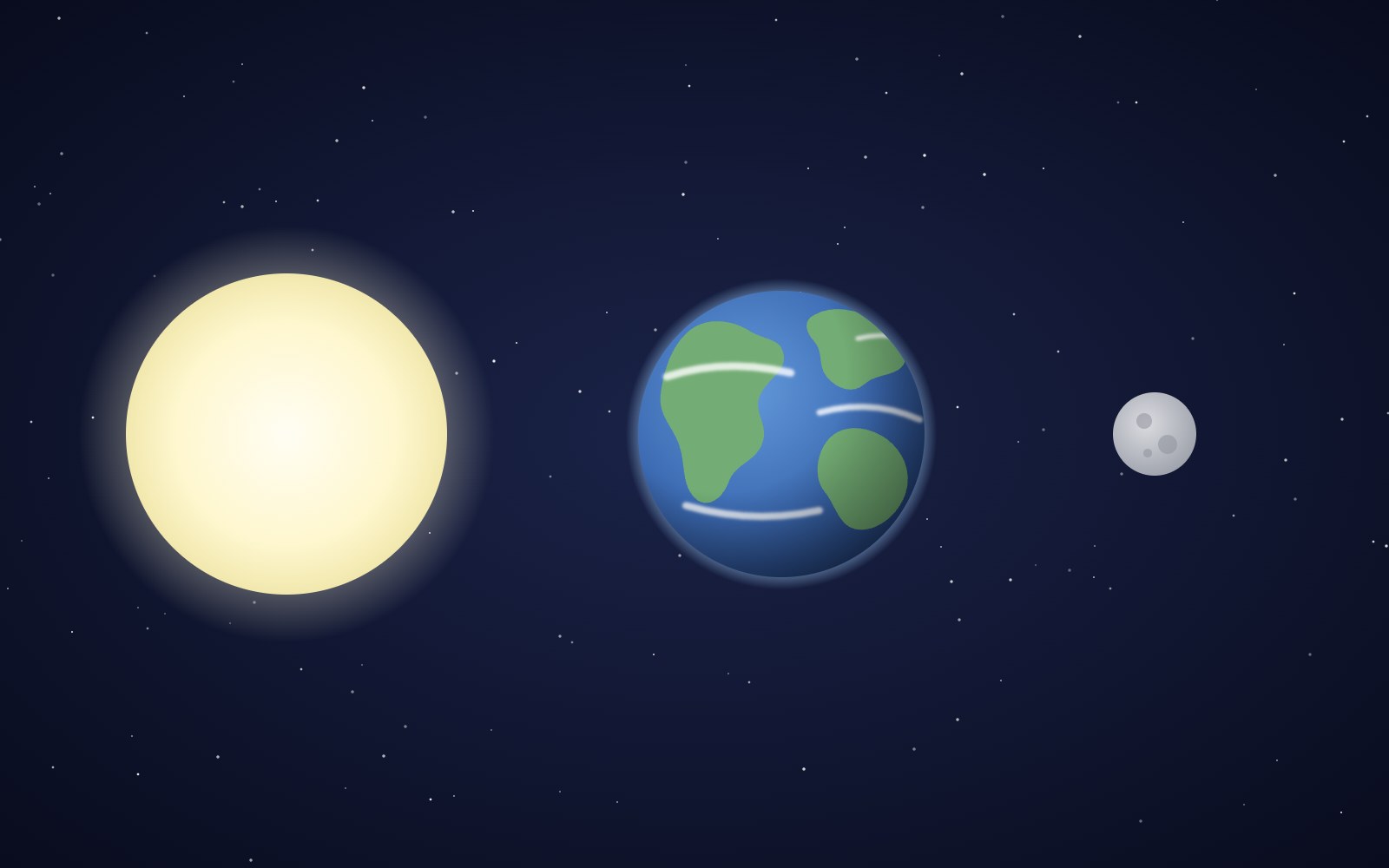
Why the sun and moon look the same size
The sun is about 400 times wider than the moon and also about 400 times farther away, so the two discs look almost the same size in our sky. That match is a coincidence of timing, and it will not last forever.
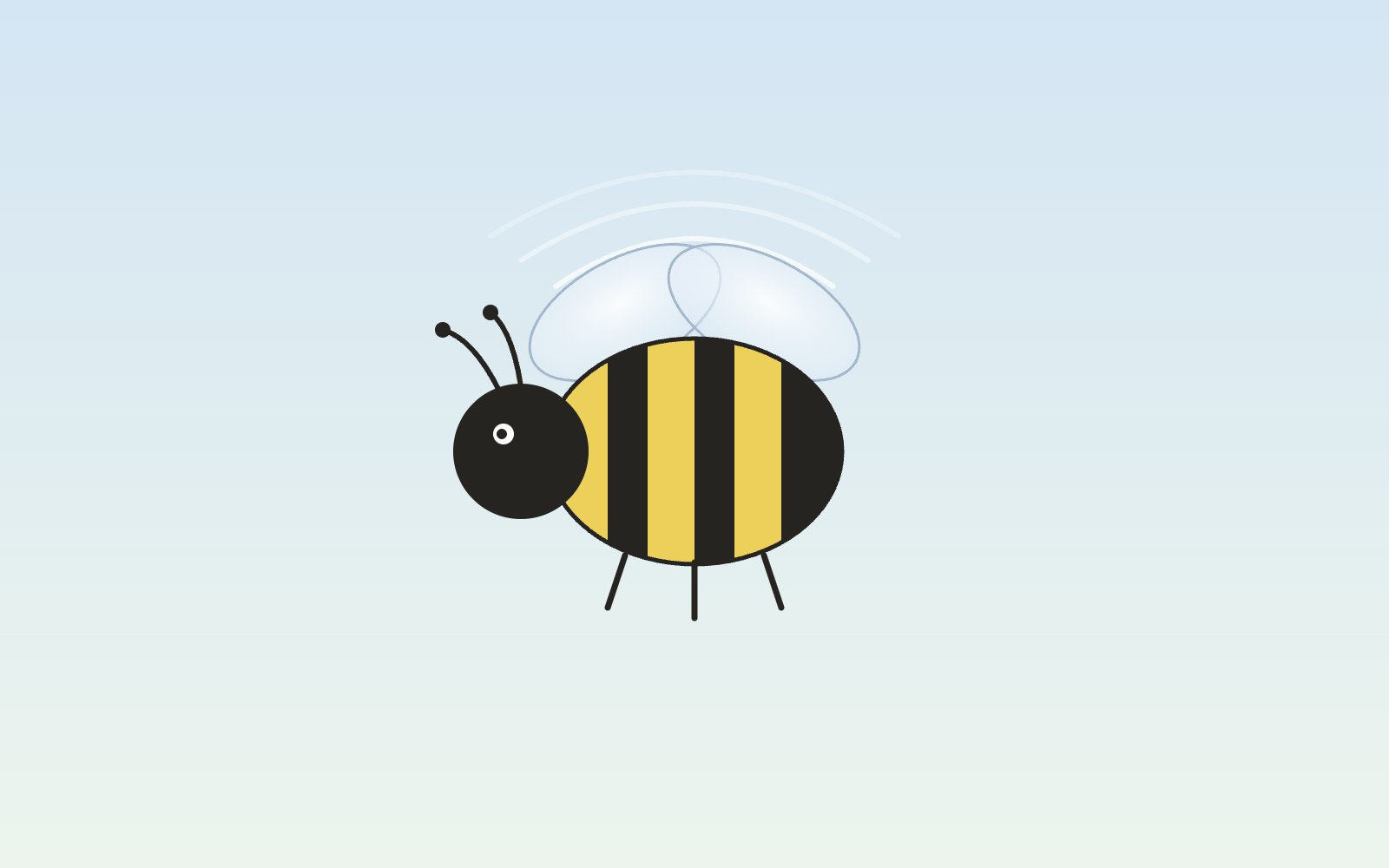
Bees fly more like drones than planes
A bumblebee stays in the air the way a drone or helicopter does, by moving its wings fast instead of racing forward over a stiff wing.

The Earth is, in fact, round
You can check that Earth is round from a beach, a campsite or a phone call to a friend in another time zone. People worked it out more than two thousand years ago, and one of them even measured it with shadows.
Meet the Night Sky UI Kit
Three animated React components for dark, night-sky themed sites: a star cursor, a twinkling starfield and a soft aurora glow. Here is what's inside and how to add it.

Behind the Star Cursor
How the Star Cursor draws its comet tail and sparkle dust, and why it quietly steps aside on touch screens and for anyone who prefers reduced motion.

5 trendy UI effects
A star cursor with a comet tail, frosted glass panels, scroll-driven animation, smooth page transitions and gradients that actually move, plus the one tip we would give for each.
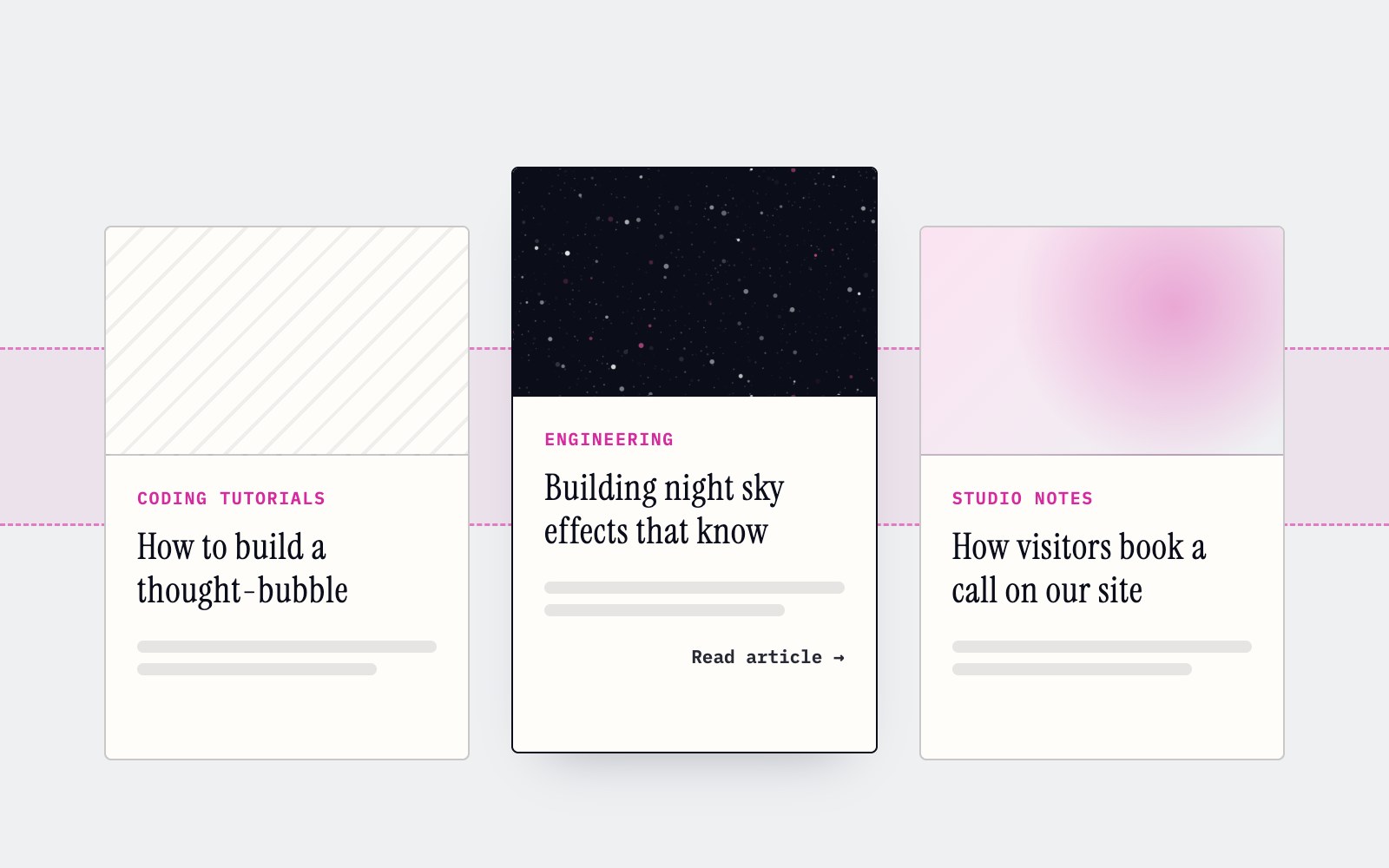
How to make cards lift as you scroll on a phone
Phones can't hover, so our blog cards used to sit flat on mobile. Here's the small CSS class and IntersectionObserver we use to lift whichever card is in the middle of the screen as you scroll.

What llms.txt is, and how we added one to our site
A plain-English look at llms.txt, the proposed markdown file that gives AI assistants a short map of your site, what it can and can't promise, and how we wrote and tested our own.

Tell Google who you are with a few lines of code
Small business names collide, and search engines have to guess which one you meant. Organization structured data is one way a site owner can stop them guessing. Here's what it is, what we put in ours, and how to test it.
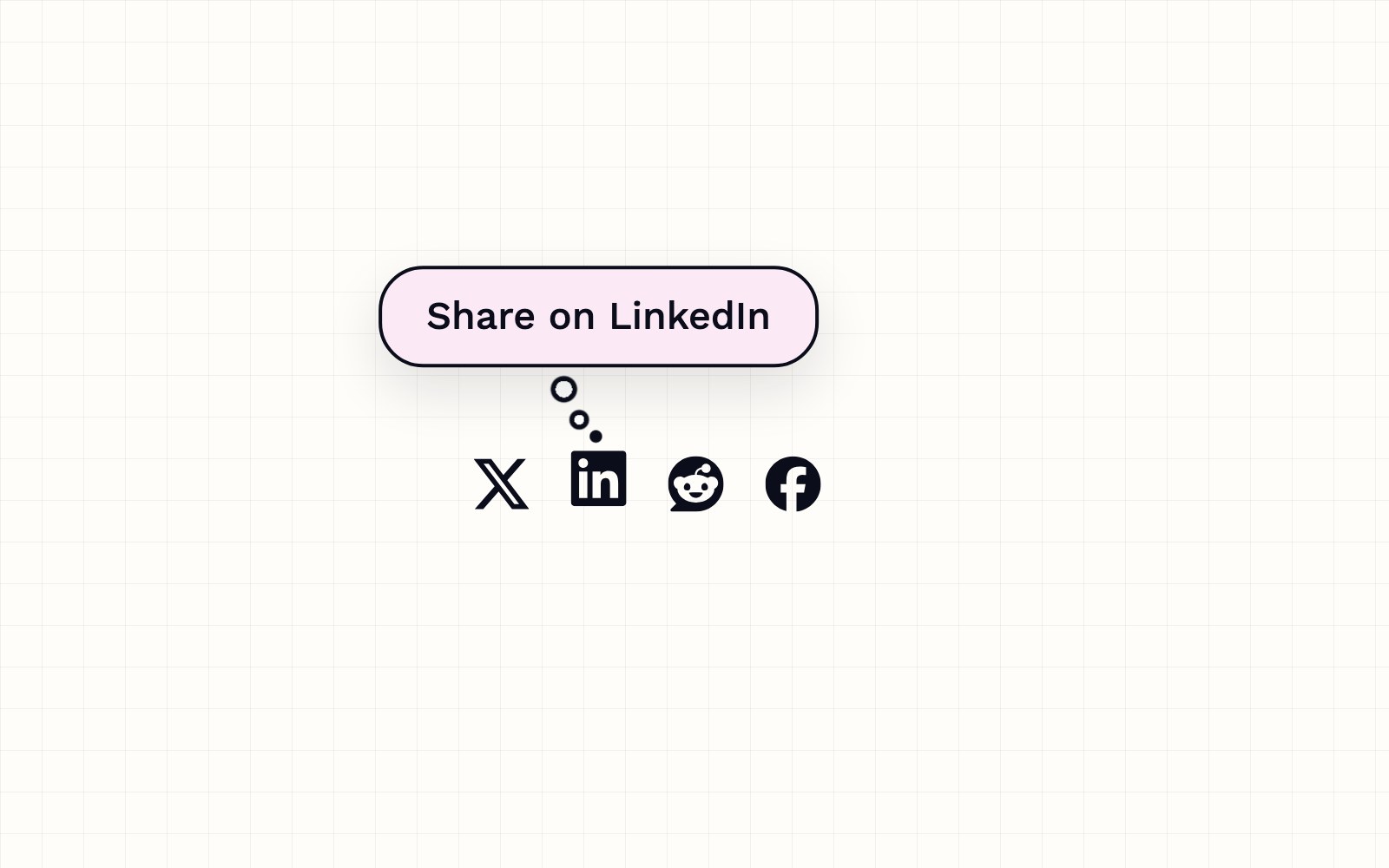
How to build a thought-bubble tooltip with pure CSS
A step-by-step CSS tutorial for a tooltip that reads its label from a data attribute, pops up in a rounded bubble, trails off in three little circles and stays clickable, with no JavaScript.

Building night sky effects that know when to sit out
How the Night Sky UI Kit's star cursor, starfield and aurora check the visitor's device and settings before they draw a single frame.

How you can set up pull requests to get an automatic first review
Give every pull request an automatic first review the moment it opens, and send each new pull request and its review to a dedicated Slack channel. Here is how the pieces fit.

How visitors book a call on our site
Picking a time with us takes a few clicks and never leaves the page. Here is how the booking calendar on our site works, and the small checks that stop two people grabbing the same hour.

Inside our resumable, review-gated video production pipeline
How we built a local seven-step pipeline that turns a history topic into a captioned video, with resumable state, bounded retries, and a human review gate.