How to make a headline type itself out
Build a headline that types itself out letter by letter with a blinking cursor, using plain HTML, CSS and a few lines of JavaScript.
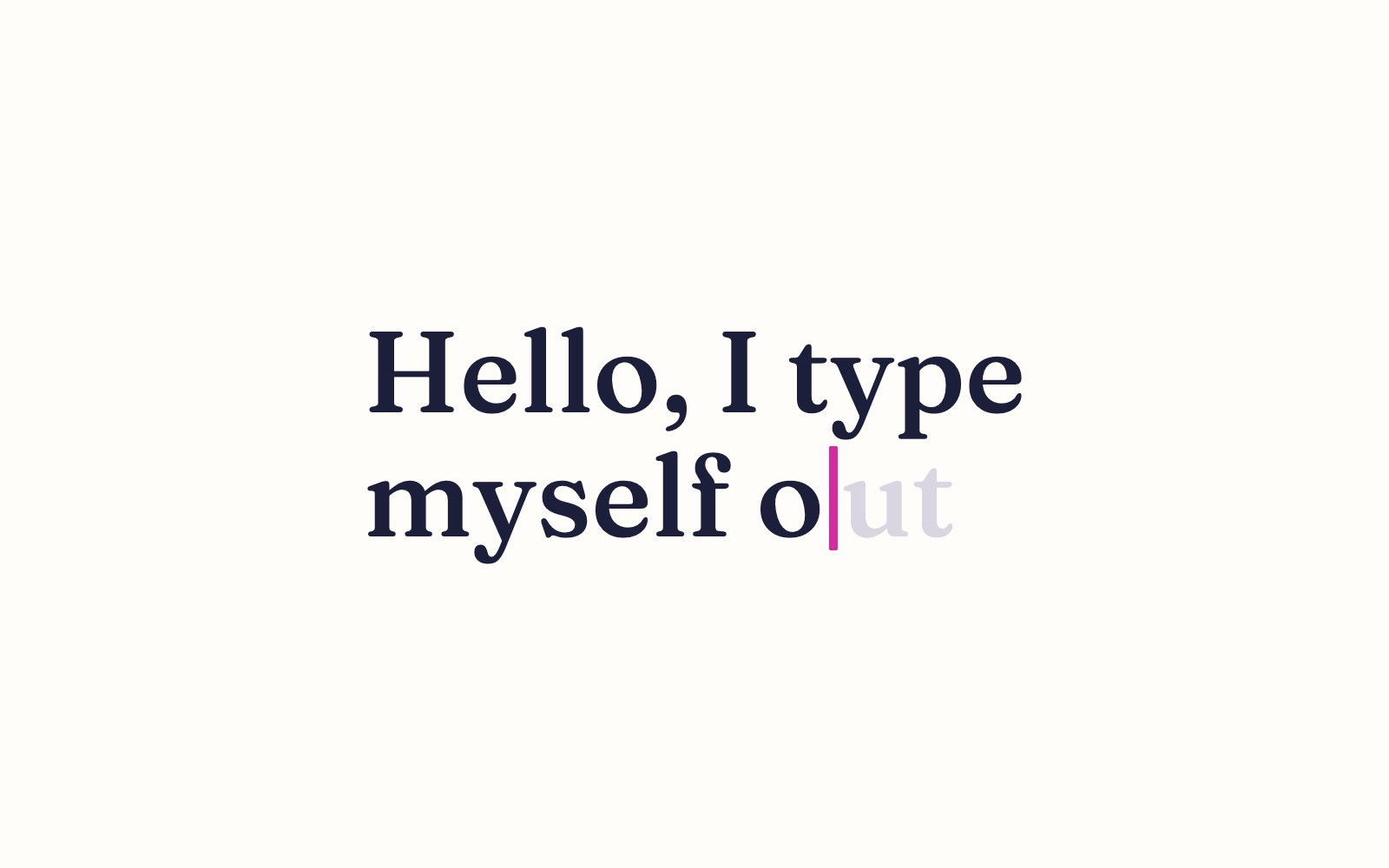
In this tutorial you'll build a headline that types itself out one letter at a time, with a little blinking cursor at the end. It's the same effect the homepage headline on this site uses. We'll keep it light: plain HTML, a bit of CSS, a short JavaScript loop, and a few small tricks so the page doesn't jump, screen readers get the full sentence, and people who prefer less motion just see the text.
Start with the markup
The headline has three layers. A visually hidden copy of the sentence is what screen readers and search engines read. A hidden ghost copy holds the space. And the live layer is the part that actually types, with the cursor right after it.
Notice that the live text already contains the full sentence in the HTML. If JavaScript fails or is switched off, people still see a normal headline. The script clears it and types it back in. The whole visual part gets aria-hidden="true" so screen readers don't hear the sentence twice, or worse, hear it one letter at a time.
The visually-hidden class is the classic pattern: the text stays in the page and in the accessibility tree, it just takes up no visible space.
<h1 class="typing-title">
  <span class="visually-hidden">Hello, I build friendly websites.</span>
  <span class="typing-box" aria-hidden="true">
    <span class="typing-ghost">Hello, I build friendly websites.</span>
    <span class="typing-live"><span class="typing-text">Hello, I build friendly websites.</span><span class="typing-cursor"></span></span>
  </span>
</h1>.visually-hidden {
position: absolute;
width: 1px;
height: 1px;
padding: 0;
margin: -1px;
overflow: hidden;
clip: rect(0, 0, 0, 0);
white-space: nowrap;
border: 0;
}Hold the space so nothing jumps
If the headline starts empty and grows, it pushes everything below it down as each new line wraps. That's layout shift, and it feels jumpy. The fix is to always reserve room for the finished sentence.
Here the ghost and the live layer sit in the same CSS grid cell, stacked on top of each other. The ghost has the full text with visibility: hidden, so it keeps its size but you never see it. The box is always as tall as the finished headline, at every screen width, with no guessed heights. Grid stacking like this works in all modern browsers.
.typing-title {
  font-size: clamp(2rem, 6vw, 4rem);
  line-height: 1.1;
}

.typing-box {
  display: grid;
}

/* Both layers sit in the same grid cell, on top of each other */
.typing-ghost
.typing-live {
  grid-area: 1 / 1;
}

/* Takes up the full space but is never seen */
.typing-ghost {
  visibility: hidden;
  padding-right: 6px; /* room for the cursor */
}
Make the cursor blink
The cursor is just an empty span shaped like a thin bar. Setting its height in em units means it scales with the font size, and the small negative vertical-align lines it up with the letters instead of the baseline.
The steps(1) timing is the trick for a real on and off blink. Without it, the opacity would fade smoothly, which looks more like a glow than a text cursor. For reduced motion we turn the blink off and leave a steady bar.
.typing-cursor {
  display: inline-block;
  width: 3px;
  height: 0.82em;
  margin-left: 3px;
  background: #e0457b;
  vertical-align: -0.08em;
  animation: cursor-blink 1s steps(1) infinite;
}

@keyframes cursor-blink {
  0% 49% { opacity: 1; }
  50% 100% { opacity: 0; }
}

@media (prefers-reduced-motion: reduce) {
  .typing-cursor {
    animation: none;
  }
}
Write the typing loop
The loop is tiny. Grab the sentence, clear the text, then add one more letter every 55 milliseconds with setTimeout until it's all there. A short delay before the first letter gives the page a moment to settle.
The reduced motion check comes first. If someone has asked their system for less motion, the script does nothing at all, so the full sentence that was already in the HTML just stays put. Put this script at the end of the body, right before the closing body tag, so the headline exists when it runs.
<script>
  const output = document.querySelector('.typing-text');
  const letters = Array.from(output.textContent);
  const reduceMotion = window.matchMedia('(prefers-reduced-motion: reduce)').matches;
  const TYPE_SPEED_MS = 55;
  const START_DELAY_MS = 300;

  if (!reduceMotion) {
    let count = 0;
    output.textContent = '';

    function typeNext() {
      count += 1;
      output.textContent = letters.slice(0, count).join('');
      if (count < letters.length) {
        setTimeout(typeNext, TYPE_SPEED_MS);
      }
    }

    setTimeout(typeNext, START_DELAY_MS);
  }
</script>
Rotate through a few phrases
Want the headline to type, pause, delete and try a new ending? That's what the homepage here does. The loop just needs to remember which phrase it's on, how many letters are showing, and whether it's typing or deleting. Each call to tick() moves one step and schedules the next.
Two things change in the markup. The visually hidden text lists every phrase, so screen reader users get all of them at once. And the ghost should hold the longest phrase, so the box is tall enough for any of them.
A loop that keeps going counts as moving content. WCAG's Pause, Stop, Hide guideline asks for a way to pause anything that moves for more than five seconds, so you can stop after one round or add a small pause button.
<h1 class="typing-title">
  <span class="visually-hidden">Hello, I build friendly websites, tiny web apps, and things people enjoy using.</span>
  <span class="typing-box" aria-hidden="true">
    <span class="typing-ghost">Hello, I build things people enjoy using.</span>
    <span class="typing-live"><span class="typing-text">Hello, I build friendly websites.</span><span class="typing-cursor"></span></span>
  </span>
</h1><script>
const output = document.querySelector('.typing-text');
const prefix = 'Hello, I build ';
const phrases = ['friendly websites.', 'tiny web apps.', 'things people enjoy using.'];
const reduceMotion = window.matchMedia('(prefers-reduced-motion: reduce)').matches;
const TYPE_SPEED_MS = 55;
const DELETE_SPEED_MS = 30;
const HOLD_FULL_MS = 1800;
const HOLD_EMPTY_MS = 400;
let phraseIndex = 0;
let length = 0;
let deleting = false;
function tick() {
const current = phrases[phraseIndex];
if (!deleting && length < current.length) {
length += 1;
output.textContent = prefix + current.slice(0, length);
setTimeout(tick, TYPE_SPEED_MS);
return;
}
if (!deleting) {
deleting = true;
setTimeout(tick, HOLD_FULL_MS);
return;
}
if (length > 0) {
length -= 1;
output.textContent = prefix + current.slice(0, length);
setTimeout(tick, DELETE_SPEED_MS);
return;
}
deleting = false;
phraseIndex = (phraseIndex + 1) % phrases.length;
setTimeout(tick, HOLD_EMPTY_MS);
}
if (!reduceMotion) {
output.textContent = prefix;
tick();
}
</script>A quick note for React
In React you can store the typed text in state and let an effect add one letter per render. Always return a cleanup that clears the timeout, otherwise a fast re-render or an unmount can leave stray timers typing into nothing. The accessibility bits stay the same: full text for screen readers, aria-hidden on the animated part.
useEffect(() => {
  if (window.matchMedia('(prefers-reduced-motion: reduce)').matches) {
    setTyped(fullText);
    return;
  }
  if (typed.length < fullText.length) {
    const t = setTimeout(() => setTyped(fullText.slice(0, typed.length + 1)), 55);
    return () => clearTimeout(t);
  }
} [typed fullText]);
One last tip: if your headline has emoji or accented letters built from more than one character, split it with Array.from() like we did in the typing loop. A plain .slice() on the string works on code units, so it can cut an emoji in half for one frame and show a broken symbol.
More articles
How to add a copy button to code blocks
Add a small Copy button to every code block on your page that copies the code, says Copied for a moment, and tells screen reader users what happened.

How to make a confetti burst on click
A no-library tutorial for a small burst of colorful confetti that pops out from the exact spot where someone clicks a link or button.
How to add a reading progress bar
Build a thin pink bar that fills across the top of the screen as someone reads your article, with a small JavaScript version and a pure CSS version for browsers that support scroll-driven animations.
How to build a dark mode toggle
A step-by-step tutorial for a dark mode that follows your visitor's device setting, adds a toggle button that saves their pick in localStorage, and never flashes the wrong theme on load.

How to make a glowing border spin
A pure CSS tutorial for a card with a pink, purple and blue gradient border that spins around the edge and glows softly, with a calm static version for people who prefer less motion.
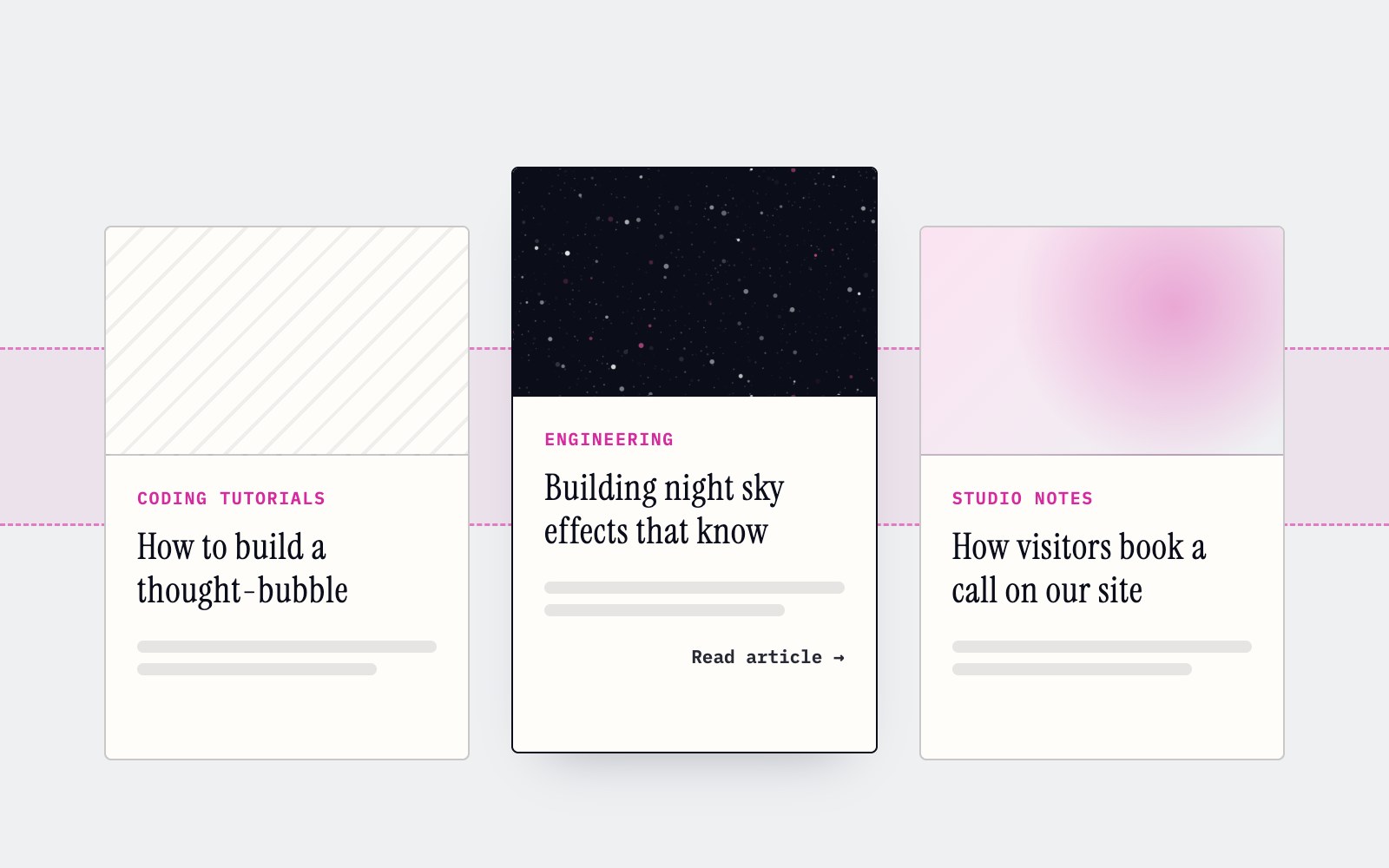
How to make cards lift as you scroll on a phone
Phones can't hover, so our blog cards used to sit flat on mobile. Here's the small CSS class and IntersectionObserver we use to lift whichever card is in the middle of the screen as you scroll.
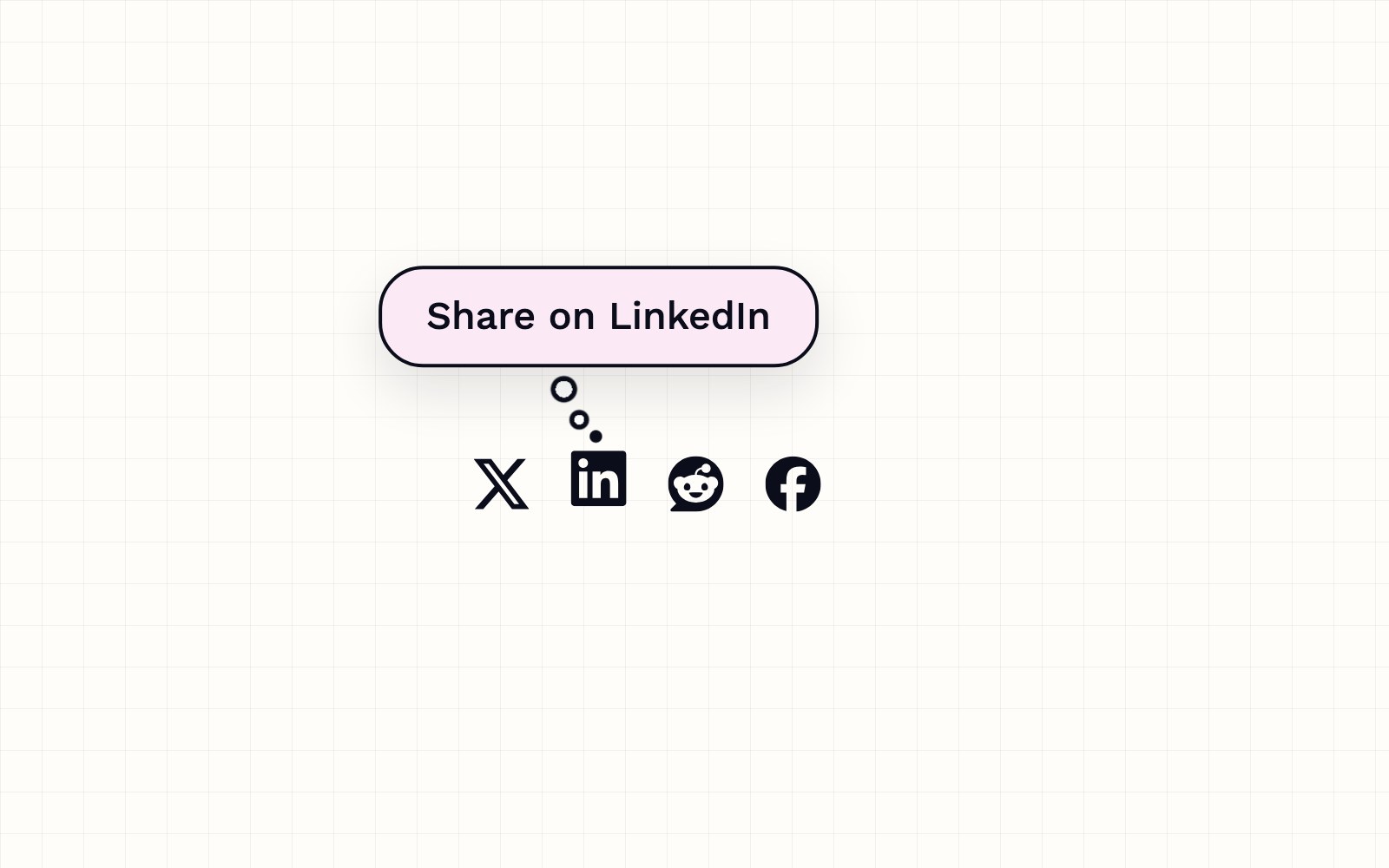
How to build a thought-bubble tooltip with pure CSS
A step-by-step CSS tutorial for a tooltip that reads its label from a data attribute, pops up in a rounded bubble, trails off in three little circles and stays clickable, with no JavaScript.
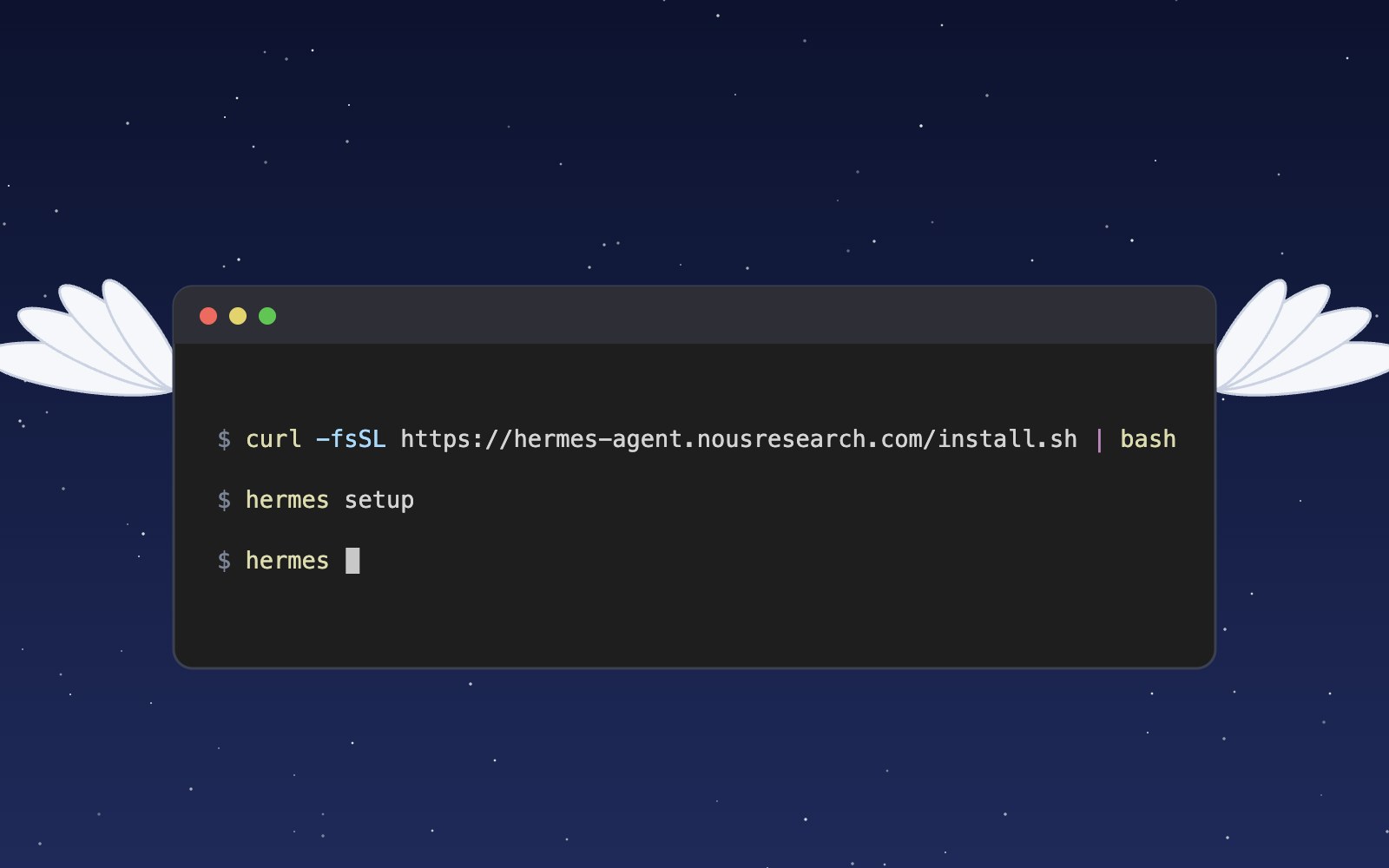
What is Hermes?
Hermes is an open source AI agent harness from Nous Research that runs on your own computer, uses tools, remembers past sessions and learns skills. Here is what it does and how to install and set it up.
Meet the Night Sky UI Kit
Three animated React components for dark, night-sky themed sites: a star cursor, a twinkling starfield and a soft aurora glow. Here is what's inside and how to add it.
Behind the Star Cursor
How the Star Cursor draws its comet tail and sparkle dust, and why it quietly steps aside on touch screens and for anyone who prefers reduced motion.
The moon is, in fact, an inanimate, dusty old rock
The moon is a layered ball of rock about 4.5 billion years old, wrapped in sharp gray dust and almost no air. Here is what it is made of, where it probably came from and why it barely changes.
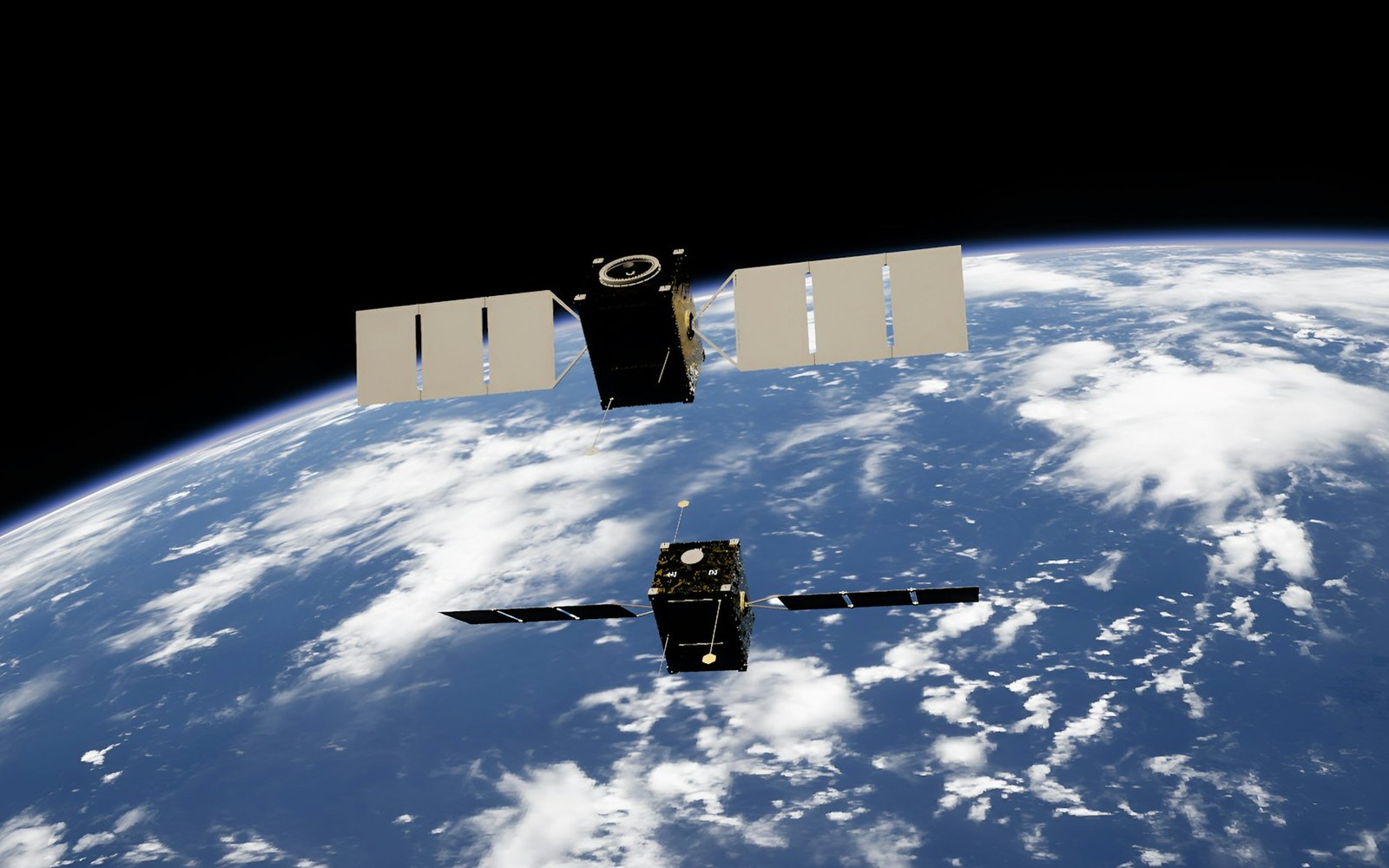
How solar storms mess with satellites
The sun has weather, and some of it reaches us. Here is how solar flares and the storms that follow can sink satellites, scramble GPS and even trip power grids, and how people keep watch.
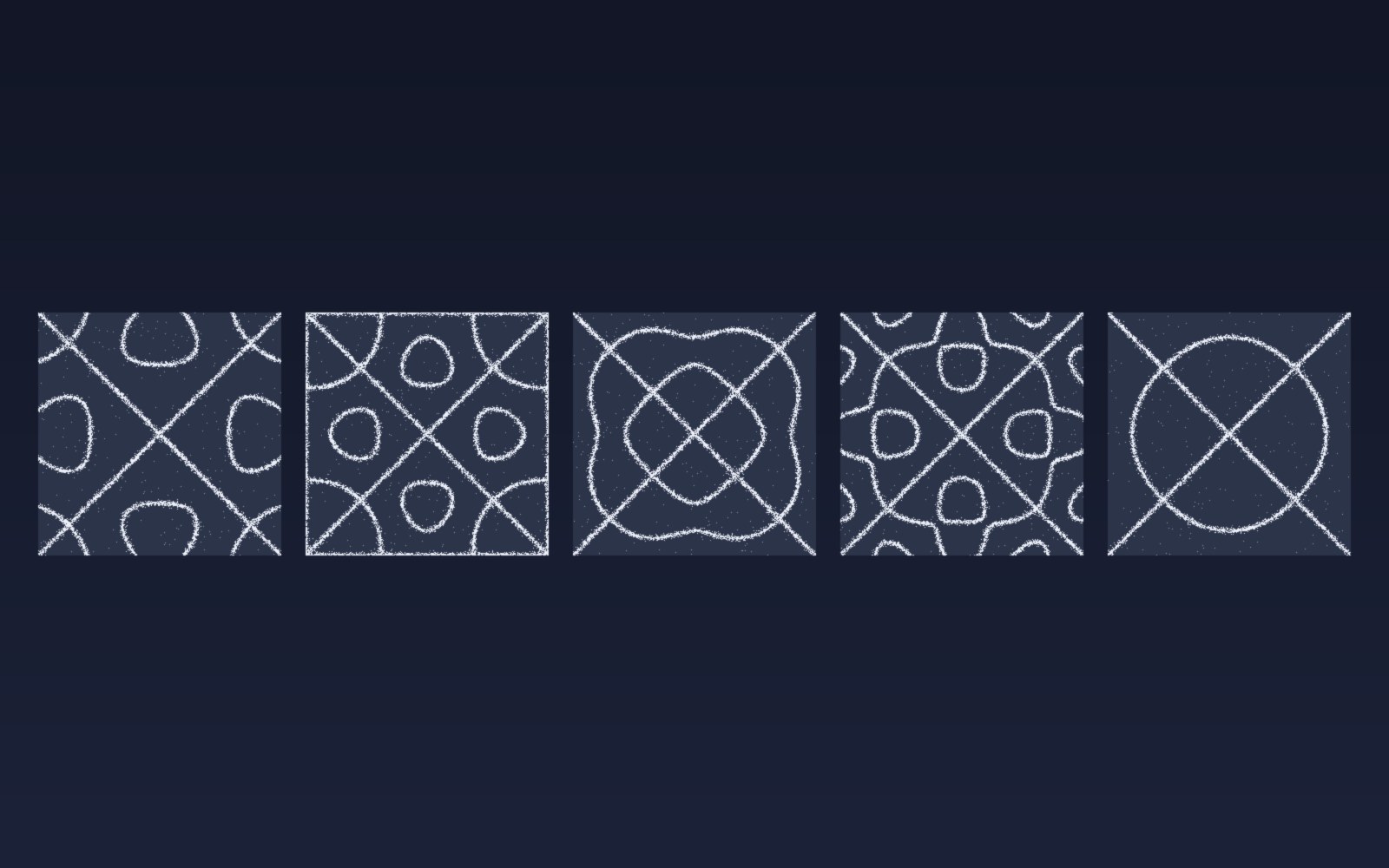
Patterns in sound
Sprinkle salt on a drum, play a steady note, and the grains slide into neat lines and rings. Here is why sound draws pictures, who first noticed, how to try it at home, and what all this has in common with a snowflake.
Most of the sound around you goes unheard
Human ears catch only a middle band of all the sound there is. Here is what we miss, which animals hear it, and why the hums and whines from our own gadgets can still get under our skin.
What is LaserSETI?
LaserSETI is a growing network of rooftop cameras that watch huge patches of the night sky for a single-color flash of light. Here is how it works, where the stations are in 2026, and what it has (and has not) found.
Most of the light around you is invisible
Our eyes catch only a thin band of all the light there is, from violet to red. Here is what we miss, which animals see more of it, and how we use the invisible rest every day.
The science of music
Why a good chorus gives you chills, why the Mozart effect fizzled, and why some songs refuse to leave your head. Here is what the research actually says about music, mood and focus.
Bill Nye is still teaching
A science show from the 1990s is still turning up in classrooms. Here is what Bill Nye the Science Guy was, why so many grownups remember it so fondly, and why teachers keep pressing play.
Why is the sky blue?
The sky is blue because the tiny bits of gas in the air reflect blue sunlight around much more than red light, so blue reaches our eyes from every part of the sky.
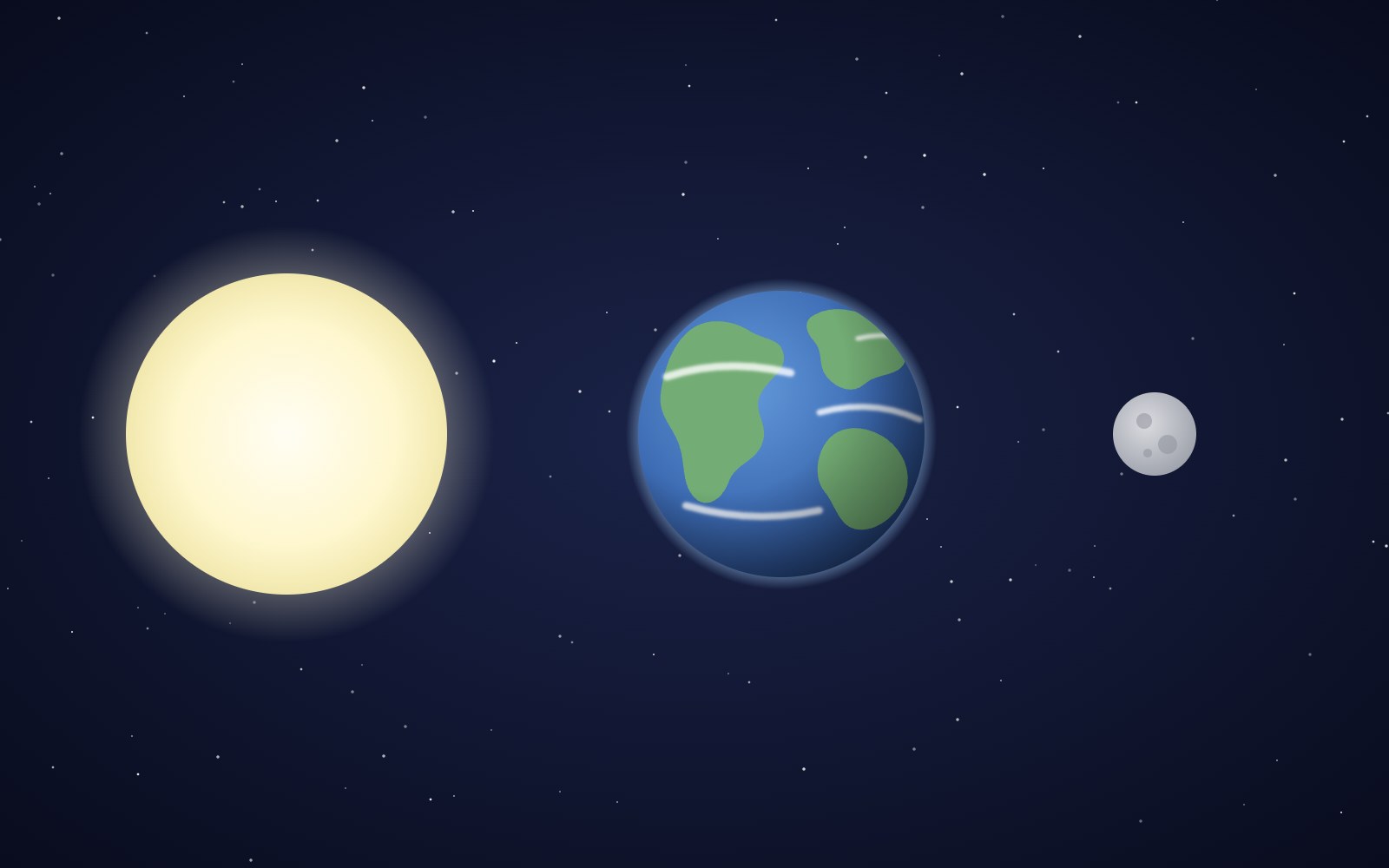
Why the sun and moon look the same size
The sun is about 400 times wider than the moon and also about 400 times farther away, so the two discs look almost the same size in our sky. That match is a coincidence of timing, and it will not last forever.
Bees fly more like drones than planes
A bumblebee stays in the air the way a drone or helicopter does, by moving its wings fast instead of racing forward over a stiff wing.
The earth is, in fact, actually round
You can check that Earth is round from a beach, a campsite or a phone call to a friend in another time zone. People worked it out more than two thousand years ago, and one of them even measured it with shadows.
5 trendy UI effects
A star cursor with a comet tail, frosted glass panels, scroll-driven animation, smooth page transitions and gradients that actually move, plus the one tip we would give for each.

What llms.txt is, and how we added one to our site
A plain-English look at llms.txt, the proposed markdown file that gives AI assistants a short map of your site, what it can and can't promise, and how we wrote and tested our own.
Tell Google who you are with a few lines of code
Small business names collide, and search engines have to guess which one you meant. Organization structured data is one way a site owner can stop them guessing. Here's what it is, what we put in ours, and how to test it.
Building night sky effects that know when to sit out
How the Night Sky UI Kit's star cursor, starfield and aurora check the visitor's device and settings before they draw a single frame.

How you can set up pull requests to get an automatic first review
Give every pull request an automatic first review the moment it opens, and send each new pull request and its review to a dedicated Slack channel. Here is how the pieces fit.
How visitors book a call on our site
Picking a time with us takes a few clicks and never leaves the page. Here is how the booking calendar on our site works, and the small checks that stop two people grabbing the same hour.
Inside our resumable, review-gated video production pipeline
How we built a local seven-step pipeline that turns a history topic into a captioned video, with resumable state, bounded retries, and a human review gate.